Quotessence
Home / Quotes / Quote by Elizabeth Goudge

Quote by Elizabeth Goudge

Work

Pilgrim's Inn

In 'Pilgrim's Inn,' readers are transported to a time of knights, merchants, and religious pilgrims. The story revolves around an innkeeper who provides shelter and solace to travelers, while also navigating the complexities of their own spiritual quest. more
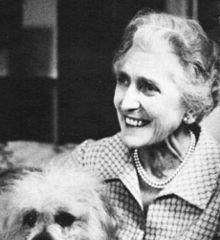
Author

Elizabeth Goudge
Elizabeth Goudge

Elizabeth Goudge was a British author born on April 24, 1900, in Kent, England, and passed away on April 1, 1984. Known for her delicate emotions and rich imagination, her works mainly include historical novels and fantasy novels. Goudge's writing often explores themes of humanity, faith, and morality, which have won her a wide audience. more

You May Also Like

“Even after agriculture was invented starting about 10,000 years ago, most farmers still lived in small villages, labored daily to produce enough food for themselves, and never imagined an existence now common in places like Tampa, Florida, where people take for granted cars, toilets, air-conditioning, cell phones, and an abundance of highly processed, calorie-rich food.”

“Yet as good as things are, they could be much better, and there are plenty of reasons to worry about the human body's future. Apart from potencial threats posed by climate change, we are also confronting a massive population boom combined with an epidemiological transition. As more people are living longer and fewer are dying young from diseases caused by infections or insufficient food, exponentially middle-aged and elderly people are suffering from chronic noninfectious diseases that used to be rare or unknown.”

“Remember that for millions of years natural selection favored women who devoted whatever extra energy they had toward reproduction, partly through the action of reproductive hormones such as estrogen. Natural selection, however, never geared women's bodies for coping with long-term surfeits of energy, estrogen, and other related hormones. As a result, women today are very different and vastly more at risk of developing cancer than mothers from long ago because their bodies are still functioning as they evolved to have as many surviving children as possible.”

“I used to think the garden of Eden story was all about Eve breaking the rules and eating the forbidden fruit. Church lessons taught us that her selfishness and deception resulted in great suffering for every generation to follow. That's the guilt we have been taught to carry as women. The serpent tricks us, and it's all our fault. Others are harmed by our naive choice, and it's all our fault. Our children stray from the right path, and it's all our fault. Truth is, the dangers were here from the start. But so was the beauty. Now I realize the story is not about punishing all of humankind for Eve's mistake. It's about relationship. It's about gratitude and honesty and choosing the right person to be by your side in life. It's about trust and partnership and loyalty. It's about love. Now, as the garden comes to life around me, I no longer think of serpents and betrayals and lies and shame. Instead, I see what God sees. I see that it is good. All of it. Good.”