Quotessence
Home / Quotes / Quote by Susanna Clarke

Quote by Susanna Clarke

“...the Other World has different things in it. Words such as "Manchester" and "police station" have no meaning here. Because these things do not exist. Words such as "river" and "mountain" do have meaning but only because those things are depicted in the Statues. I suppose that these things must exist in the Older World. In this World the Statues depict things that exist in the Older World.' 'Yes,' said Raphael. 'Here you can only see a representation of a river or a mountain, but in our world--the other world--you can see the actual river and the actual mountain.' This annoyed me. 'I do not see why you say I can ONLY see a representation in this World,' I said with some sharpness. 'The word "only" suggests a relationship of inferiority. You make it sound as if the Statue was somehow inferior to the thing itself. I do not see that that is the case at all. I would argue that the Statue is superior to the thing itself, the Statue being perfect, eternal and not subject to decay.' 'Sorry,' said Raphael. 'I didn't mean to disparage your world.' There was a silence. 'What is the Other World like?' I asked.”

Quote by Susanna Clarke

Work

Piranesi

Browse quotes and source details for this work. more

Author

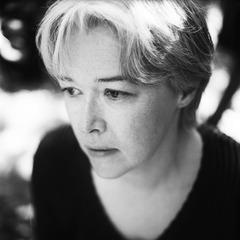
Susanna Clarke
Susanna Clarke

Susanna Clarke is a British author best known for her novel 'American Gods', which has won numerous awards, including the Hugo Award. Born on November 1, 1959, Clarke grew up in the UK and studied English literature at Oxford University. Her career began as a literary editor before she turned to writing. 'American Gods' is a fantasy novel that blends history, mythology, and science fiction, and it has achieved both critical acclaim and commercial success. Clarke's work is celebrated for its unique narrative techniques and profound exploration of social and cultural issues, having a significant impact on contemporary fantasy literature. more

You May Also Like

“Novelists when they write novels tend to take an almost godlike attitude toward their subject, pretending to a total comprehension of the story, a man's life, which they can therefore recount as God Himself might, nothing standing between them and the naked truth, the entire story meaningful in every detail. I am as little able to do this as the novelist is, even though my story is more important to me than any novelist's is to him - for this is my story; it is the story of a man, not of an invented, or possible, or idealized, or otherwise absent figure, but of a unique being of flesh and blood, Yet, what a real living human being is made of seems to be less understood today than at any time before, and men - each one of whom represents a unique and valuable experiment on the part of nature - are therefore shot wholesale nowadays. If we were not something more than unique human beings, if each one of us could really be done away with once and for all by a single bullet, storytelling would lose all purpose. But every man is more than just himself; he also represents the unique, the very special and always significant and remarkable point at which the world's phenomena intersect, only once in this way and never again. That is why every man's story is important, eternal, sacred; that is why every man, as long as he lives and fulfills the will of nature, is wondrous, and worthy of every consideration. In each individual the spirit has become flesh, in each man the creation suffers, within each one a redeemer is nailed to the cross.”

“Thomas skillfully crafts a narrative that not only delves into the complexities of Christopher's internal struggles but also unravels the dynamics of his family and friendships. The author presents a nuanced portrayal of a young man caught between the expectations of his family and the skepticism of his friends, adding layers of depth to the central conflict. Cheryl Thomas's writing exudes authenticity and a deep understanding of human nature. Her characters come alive with actual personalities, problems, and relationships, creating a rich and immersive reading experience. The narrative not only explores the struggles of an individual but also touches on broader spiritual themes that add depth to the storytelling. "The Last One" is not just a tale of personal choices but a profound exploration of destiny and the impact of one individual's decisions on the entire human race. As readers journey through this gripping narrative, they are invited to contemplate the profound implications of the choices we make and the redemptive power of divine intervention. In conclusion, Cheryl Thomas's "The Last One" is a masterfully crafted work that combines elements of suspense, spiritual exploration, and dynamic character development. This book is a testament to Thomas's ability to breathe life into her storytelling, making it a must-read for those seeking a thought-provoking and immersive literary experience.”