“The /utility /economists, according to Wicksell, were committed to a “thoroughly revolutionary programme” precisely on this question of distribution of income.^9 Marshall, and to some extent Pigou, got out of the fix that their theory had landed them in by emphasizing the danger to total physical national income that would be associated with an attempt to increase its /utility /by making its distribution more equal. This argument has been spoiled by the Keynesian revolution. If, as Keynes expected, saving is more than sufficient for a satisfactory rate of private investment, to use it for social purpose is not only harmless but actually beneficial to National Income, while if more total saving is needed than would be forthcoming under /laisser faire /it can easily be supplemented by budget surpluses. Edgworth, as we saw above,^10 and many after him, took refuge in the argument that we do not really know that greater equality would promote greater happiness, because individuals differ in their capacity for happiness, so that, until we have a thoroughly scientific hedonimeter, “the principle ‘every man, and every woman, to count for one,’ should be very cautiously applied.”^11 Many years ago, this point of view was expressed by Professor Harberler: “How do I know that it hurts you more to have your leg cut off than it hurts me to be pricked by a pin?” It seemed at the time that it would have been more telling if he had put it the other way round. Such arguments are getting rather dangerous nowadays, for though we shall presumably never have a hedonimeter whose findings would be unambiguous, the scientific measurement of pain is fairly well developed, and it would be very surprising if a national survey of the distribution of susceptibility to pain turned out to have just the same skew as the distribution of income. If the question is once put: Would a greater contribution to human welfare be made by an investment in capacity to produce knick-knacks that have to be advertised in order to be sold or an investment in improving the health service, it seems to me that the answer would be only too obvious; the best reply that /laisser-faire /ideology can offer is not to ask the question. [pp. 127-8]”
Quote by Joan Robinson
Book:Economic philosophy
Work
Economic philosophy
Economic Philosophy delves into the foundational concepts that shape economic theory, including the works of key thinkers and the evolution of economic ideas throughout history. more
Author
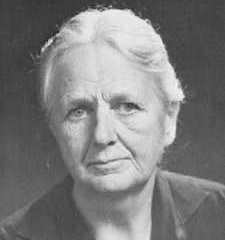
Joan Robinson
Joan Robinson was a British economist renowned for her work on imperfect competition theory and labor theory of value. Her contributions have had a profound impact on the development of economics. more
You May Also Like
Source: Economic philosophy
Source: Hayek: A Life, 1899–1950
Source: Hayek: A Life, 1899–1950
“...heartsickness is a gateway to hard-heartedness.”
Source: Curious Faith
Source: Hope for Hard Times
Source: Gaze Upon Jesus: Experiencing Christ's Childhood through the Eyes of Women
Source: The Library Book
Source: Vanishing Bodies: An Epic Science Fiction Thriller