Quotessence
Home / Quotes / Quote by David Levithan

Quote by David Levithan

“i do not say 'good-bye.' i believe that's one of the bullshittiest words ever invented. it's not like you're given the choice to say 'bad-bye' or 'awful-bye' or 'couldn't-care-less-about-you-bye.' every time you leave, it's supposed to be a good one. well, i don't believe in that. i believe against that.”

Quote by David Levithan

Work

Will Grayson, Will Grayson

Will Grayson, Will Grayson is a novel that delves into the complexities of adolescence, featuring two characters named Will Grayson who share the same name but lead vastly different lives. The narrative unfolds through alternating perspectives, showcasing the diverse ways in which individuals navigate their personal journeys. The story explores themes of friendship, identity, and the search for belonging, offering a poignant and relatable portrayal of young adulthood. more

Author
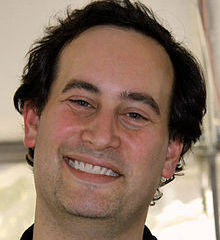
David Levithan
David Levithan

David Levithan, born on September 7, 1972, is a renowned author from the United States. His works span across various genres including young adult literature, adult fiction, and non-fiction, known for his unique narrative style and profound insights into social issues. more

You May Also Like

“When people dis fantasy—mainstream readers and SF readers alike—they are almost always talking about one sub-genre of fantastic literature. They are talking about Tolkien, and Tolkien's innumerable heirs. Call it 'epic', or 'high', or 'genre' fantasy, this is what fantasy has come to mean. Which is misleading as well as unfortunate. Tolkien is the wen on the arse of fantasy literature. His oeuvre is massive and contagious—you can't ignore it, so don't even try. The best you can do is consciously try to lance the boil. And there's a lot to dislike—his cod-Wagnerian pomposity, his boys-own-adventure glorying in war, his small-minded and reactionary love for hierarchical status-quos, his belief in absolute morality that blurs moral and political complexity. Tolkien's clichés—elves 'n' dwarfs 'n' magic rings—have spread like viruses. He wrote that the function of fantasy was 'consolation', thereby making it an article of policy that a fantasy writer should mollycoddle the reader. That is a revolting idea, and one, thankfully, that plenty of fantasists have ignored. From the Surrealists through the pulps—via Mervyn Peake and Mikhael Bulgakov and Stefan Grabiński and Bruno Schulz and Michael Moorcock and M. John Harrison and I could go on—the best writers have used the fantastic aesthetic precisely to challenge, to alienate, to subvert and undermine expectations. Of course I'm not saying that any fan of Tolkien is no friend of mine—that would cut my social circle considerably. Nor would I claim that it's impossible to write a good fantasy book with elves and dwarfs in it—Michael Swanwick's superb Iron Dragon's Daughter gives the lie to that. But given that the pleasure of fantasy is supposed to be in its limitless creativity, why not try to come up with some different themes, as well as unconventional monsters? Why not use fantasy to challenge social and aesthetic lies? Thankfully, the alternative tradition of fantasy has never died. And it's getting stronger. Chris Wooding, Michael Swanwick, Mary Gentle, Paul di Filippo, Jeff VanderMeer, and many others, are all producing works based on fantasy's radicalism. Where traditional fantasy has been rural and bucolic, this is often urban, and frequently brutal. Characters are more than cardboard cutouts, and they're not defined by race or sex. Things are gritty and tricky, just as in real life. This is fantasy not as comfort-food, but as challenge. The critic Gabe Chouinard has said that we're entering a new period, a renaissance in the creative radicalism of fantasy that hasn't been seen since the New Wave of the sixties and seventies, and in echo of which he has christened the Next Wave. I don't know if he's right, but I'm excited. This is a radical literature. It's the literature we most deserve.”

“People are fond of spouting out the old cliché about how Van Gogh never sold a painting in his lifetime. Somehow his example serves to justify to us, decades later, that there is merit in utter failure. Perhaps, but the man did commit suicide. The market for his work took off big-time shortly after his death. Had he decided to stick around another few decades he most likely would’ve entered old age quite prosperous. And sadly for failures everywhere, the cliché would have lost a lot of its power. The fact is, the old clichés work for us in abstract terms, but they never work out in real life quite the same way. Life is messy; clichés are clean and tidy.”