Quotessence
Home / Quotes / Quote by Charles Dickens

Quote by Charles Dickens

“It is required of every man... that the spirit within him should walk abroad among his fellow men, and travel far and wide; and if that spirit goes not forth in life, it is condemned to do so after death... It is doomed to wander through the world... and witness what it cannot share, but might have shared on earth, and turned to happiness.”

Quote by Charles Dickens

Work

A Christmas Carol

Charles Dickens' 'A Christmas Carol' is a novella that explores themes of greed, charity, and the spirit of giving. The story follows Ebenezer Scrooge, a miserly and cold-hearted businessman, who is visited by the ghost of his deceased business partner, Jacob Marley, and three spirits: the Ghost of Christmas Past, the Ghost of Christmas Present, and the Ghost of Christmas Yet to Come. Through these encounters, Scrooge is shown the errors of his ways and is ultimately transformed into a more compassionate and generous individual. more

Author

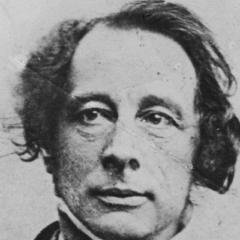
Charles Dickens
Charles Dickens

Charles Dickens, a British writer born on February 7, 1812, and died on June 9, 1870, is one of the greatest novelists of the 19th century. Known for his profound social criticism and vivid narrative style, Dickens' works extensively cover social reality, revealing various issues in the British society of the time. more

You May Also Like

“The idealized market was supposed to deliver ‘friction free’ exchanges, in which the desires of consumers would be met directly, without the need for intervention or mediation by regulatory agencies. Yet the drive to assess the performance of workers and to measure forms of labor which, by their nature, are resistant to quantification, has inevitably required additional layers of management and bureaucracy. What we have is not a direct comparison of workers’ performance or output, but a comparison between the audited representation of that performance and output. Inevitably, a short-circuiting occurs, and work becomes geared towards the generation and massaging of representations rather than to the official goals of the work itself. Indeed, an anthropological study of local government in Britain argues that ‘More effort goes into ensuring that a local authority’s services are represented correctly than goes into actually improving those services’. This reversal of priorities is one of the hallmarks of a system which can be characterized without hyperbole as ‘market Stalinism’. What late capitalism repeats from Stalinism is just this valuing of symbols of achievement over actual achievement. […] It would be a mistake to regard this market Stalinism as some deviation from the ‘true spirit’ of capitalism. On the contrary, it would be better to say that an essential dimension of Stalinism was inhibited by its association with a social project like socialism and can only emerge in a late capitalist culture in which images acquire an autonomous force. The way value is generated on the stock exchange depends of course less on what a company ‘really does’, and more on perceptions of, and beliefs about, its (future) performance. In capitalism, that is to say, all that is solid melts into PR, and late capitalism is defined at least as much by this ubiquitous tendency towards PR-production as it is by the imposition of market mechanisms.”

“The capitalist-imperialist governments, even though they themselves are about to be plundered, will not fight with any conviction against Fascism as such. Our rulers, those of them who understand the issue, would probably prefer to hand over every square inch of the British Empire to Italy, Germany, and Japan than to see Socialism triumphant. It was easy to laugh at Fascism when we imagined that it was based on hysterical nationalism, because it seemed obvious that the Fascist states, each regarding itself as the chosen people and patriotic contra mundum, would clash with one another. But nothing of the kind is happening. Fascism is now an international movement, which means not only that the Fascist nations can combine for the purposes of loot, but that they are groping, perhaps only half consciously as yet, toward a world-system. For the vision of the totalitarian state there is being substituted the vision of the totalitarian world. As I pointed out earlier, the advance of machine-technique must lead ultimately to some form of collectivism, but that form need not necessarily be equalitarian; that is, it need not be Socialism. Pace the economists, it is quite possible to imagine a world-society, economically collectivist–that is, with the profit principle eliminated–but will all political, military, and educational power in the hands of a small caste of rulers and their bravos. That or something like it is the objective of Fascism. And that, of course, is the slave-state, or rather the slave-world; it would probably be a stable form of society, and the chances are, considering the enormous wealth of the world if scientifically exploited, that the slaves would be well-fed and contented.”

“It is the Left that secrets and desperately reproduces power, because it wants power, and therefore the Left believes in it and revives it precisely where the system puts an end to it. The system puts an end one by one to all its axioms, to all its institutions, and realizes one by one all the objectives of all the historical and revolutionary Left that sees itself constrained to revive the wheels of capital in order to lay siege to them one day: from private property to small business, from the army to national grandeur, from puritan morality to petit bourgeois culture, justice at the university—everything that is disappearing, that the system, in its atrocity, certainly, but also in its irreversible impulse, has liquidated, must be conserved.”

“Tendo incorporado tudo que lhe era exterior tão completamente, como pode funcionar sem um exterior para colonizar ou do qual se apropriar? Para a maior parte das pessoas que com menos de 20 anos, na Europa e na América do Norte, a falta de alternativas ao capitalismo não é se nem sequer uma questão. Jameson costumava se referir, horrorizado, aos caminhos pelos quais o capitalismo se infiltrava no próprio inconsciente; agora, o fato de que o capitalismo terá colonizado até os sonhos da população é tão amplamente aceito que nem vale a pena comentar.”

“Em vez de atribuir aos indivíduos a responsabilidade de lidar com seus problemas psicológicos, aceitando a ampla privatização do estresse que aconteceu nos últimos trinta anos, precisamos perguntar: quando se tornou aceitável que uma quantidade tão grande de pessoas, e uma quantidade especialmente grande de jovens, estejam doentes? A epidemia de doença mental nas sociedades capitalistas deveria sugerir que, ao invés de ser o único sistema que funciona, o capitalismo é inerentemente disfuncional, e o custo para que ele pareça funcionar é demasiado alto.”

“We are all familiar with bureaucratic libido, with the enjoyment that certain officials derive from this position of disavowed responsibility (‘it’s not me, I’m afraid, it’s the regulations’). The frustration of dealing with bureaucrats often arises because they themselves can make no decisions; rather, they are permitted only to refer to decisions that have always-already been made (by the big Other). Kafka was the greatest writer on bureaucracy because he saw that this structure of disavowal was inherent to bureaucracy.”