Quotessence
Home / Quotes / Quote by Robin Wall Kimmerer

Quote by Robin Wall Kimmerer

“We do not pay at the pump for the cost of climate change. For the loss of ecosystem services provided by maples and others. Cheap gas now or maples for the next generation? Call me crazy but I’d welcome the tax that would resolve that question. Individuals far wiser than I have said that we get the government we deserve. That may be true but the maples our most generous of benefactors, most responsible of citizens do not deserve our government: they deserve you and me speaking up on their behalf. To quote our town councilwoman “Show up at the damn meeting” Political action, civil engagement these are powerful acts of reciprocity with the land. The maple nation bill of responsibilities asks us to stand up for the standing people to lead with the wisdom of maples.”

Quote by Robin Wall Kimmerer

Work

Author

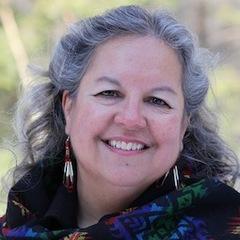
Robin Wall Kimmerer
Robin Wall Kimmerer

Robin Wall Kimmerer is an American author, ecologist, and indigenous plant scientist. Born in 1953, she is a member of the Hénan-Hénatsi tribe and an active advocate for environmental protection. Her work blends science, literature, and indigenous knowledge, exploring the relationship between humans and nature. more

You May Also Like

“Bringing a candle to a neighbor's home who had their power cut off, is far holier than lighting a thousand candles in the church. If you bring electricity to a marginalized community with a simple solar power kit, it's a far greater scientific achievement than the gargantuan glories of the LHC. There is no greater scientific achievement than simple science solving big problems. There is no greater holiness than trading in the bible for a simple act of kindness.”

“You ask me if an ordinary person, by studying hard, would get to be able to imagine these things like I imagine. Of course. I was an ordinary person who studied hard. There's no miracle people — it just happens, they got interested in this thing and they learned all this stuff. They're just people. There's no talent, a special miracle ability to understand quantum mechanics or a miracle ability to imagine electromagnetic fields that comes without practice and reading and learning and study. So, if you say you take an ordinary person who's willing to devote a great deal of time and study and work and thinking and mathematics and time, then he's become a scientist.”

“學生在做科學實驗時,也經常發生這種情況。通常學生都知道實驗會出現怎樣的結果,所以他們會動一些手腳,努力讓結果更漂亮。在讀取計量器的刻度時,會將數值讀得高一點,或是低一點,當得出接近理想的結果時,就會感到滿足,完全沒有發現自己犯了根本性的錯誤。在判斷實驗是否正確時,最好事先不知道會得出怎樣的結果,同樣地,我認為不告訴你們那片拼圖是誰會比較好,這就是我剛才說的,希望答案具有客觀性。”

“And here are trees and I know their gnarled surface, water and I feel its taste, These scents of grass and stars at night, certain evenings when the heart relaxes—how shall I negate this world whose power and strength I feel? Yet all the knowledge on earth will give me nothing to assure me that this world is mine. You describe it to me and you teach me to classify it. You enumerate its laws and in my thirst for knowledge I admit that they are true. You take apart its mechanism and my hope increases. At the final stage you teach me that this wondrous and multicolored universe can be reduced to the atom and that the atom itself can be reduced to the electron. All this is good and I wait for you to continue. But you tell me of an invisible planetary system in which electrons gravitate around a nucleus. You explain this world to me with an image. I realize then that you have been reduced to poetry: I shall never know...So that science that was to teach me everything ends up in hypothesis, that lucidity founders in metaphor, that uncertainty is resolved in a work of art. What need had I of so many efforts? The soft lines of these hills and the hand of evening on this troubled heart teach me much more.”

“And here are trees and I know their gnarled surface, water and I feel its taste. These scents of grass and stars at night, certain evenings when the heart relaxes —how shall I negate this world whose power and strength I feel? Yet all the knowledge on earth will give me nothing to assure me that this world is mine. You describe it to me and you teach me to classify it. You enumerate its laws and in my thirst for knowledge I admit that they are true. You take apart its mechanism and my hope increases. At the final stage you teach me that this wondrous and multicolored universe can be reduced to the atom and that the atom itself can be reduced to the electron. All this is good and I wait for you to continue. But you tell me of an invisible planetary system in which electrons gravitate around a nucleus. You explain this world to me with an image. I realize then that you have been reduced to poetry: I shall never know.…So that science that was to teach me everything ends up in a hypothesis, that lucidity founders in metaphor, that uncertainty is resolved in a work of art. What need had I of so many efforts? The soft lines of these hills and the hand of evening on this troubled heart teach me much more. I have returned to my beginning. I realize that if through science I can seize phenomena and enumerate them, I cannot, for all that, apprehend the world. Were I to trace its entire relief with my finger, I should not know any more.”