Quotessence
Home / Quotes / Quote by Lillian Hellman

Quote by Lillian Hellman

“It was in that tree that I learned to read, filled with the passions that can only come to the bookish, grasping, very young, bewildered by almost all of what I read, sweating in the attempt to understand a world of adults I fled from in real life but desperately wanted to join in books. (I did not connect the grown men and women in literature with the grown men and women I saw around me. They were, to me, another species.)”

Quote by Lillian Hellman

Work

An Unfinished Woman: A Memoir

Browse quotes and source details for this work. more

Author
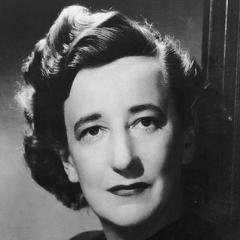
Lillian Hellman
Lillian Hellman

Lillian Hellman was an American playwright and screenwriter, renowned for her dramatic works and political activism. Her plays frequently delved into themes of political intrigue and personal morality, making her a significant figure in American theater during the mid-20th century. more

You May Also Like

“Growing up it had been her entire world, an oasis where on hot summer afternoons they drank iced mint sherbets under a canopy of trees, and when the sun went down they ate juicy kebabs on three-feet-long skewers. As the evening wore on, they lit lanterns and the yard acquired depth like a stage. The waiters wheeled out a three-tiered chariot of fruit compotes, rum babas, crème caramel, and charlotte russe, with bottles of liqueurs and digestifs glowing on the lower shelf. Soon after, the music would start. Noor sat on her grandmother's lap, spooning pistachio ice cream into her mouth with vanilla wafers, while Pari serenaded them.”

“The headlights of parked cars shone through the rain, and the sidewalks extended, empty, into the darkness. Underground, the sewers surged like rivers, and a few blocks away, sirens blared. He was no longer aware of his heart or thoughts, only the image of a sunken face staring up from a well, the paleness rising through the water like polished bone. A ringed hand reached toward it, but as the fingers approached, the face would sink away, its eyes opening, closing, and the droplets of red falling like leaves. He was a child running through an autumn cemetery, leaping over cast iron fences, the rain bleeding into the tombstones and the roofs of the mausoleums, his legs following the wings of a crow, flapping to the north. A hedge of withered roses stood between him and his childhood house. He tripped and grazed his cheek on a manhole, his red blooming in the water. The sun set behind the hill; the house turned black—abandoned and derelict—and Chris knew he had to keep running, ahead, into the unknown.”

“When Kate arrived, Alice offered her breakfast: strong coffee, coffee cake made from a sweet yeast dough, and bacon baked on a cookie sheet in the oven. When they finished eating, Alice handed Kate a black-and-white-speckled notebook filled with details about her childhood in North Carolina. With growing interest Kate read about the gentle slope of land upon which Alice's family built their farm and how in the mornings the dew looked like steam rising from the grass. She read about the pigs Alice's family raised, how they were finished on acorns, making their meat unbelievably silky. Kate read about Alice's mother's cooking, how she could turn the humblest ingredients into something magical: creamy chess pies, tender squirrel stew, butter nut cookies at Christmas time that were both salty and sweet.”

“If a child’s emotional and intellectual freedom is restricted, their development and well-being suffer, which leads to complex problems in later life. Deprivation of thought and emotion results in an irrationality of cognition, feeling, and communication.”

“Only when a child’s authenticity is threatened do they develop unhealthy behaviors, distorted reality perceptions, and emotional difficulties. When you force a child to do what they don’t want to do, feel what they don’t feel, and think what they don’t think, their authentic self becomes damaged.”

“A controlled child also learns that the default human approach to interaction is forcing, threatening, or manipulating others. Alternatively, they may come to believe that they are “destined” to be a giver who never receives anything back.”