Quotessence
Home / Quotes / Quote by Natalia Ginzburg

Quote by Natalia Ginzburg

“Y los detalles se gastan, se echan a perder si uno los lleva consigo sin utilizarlos durante mucho tiempo. No sólo los detalles sino todo, todas las ocurrencias y las ideas.”

Quote by Natalia Ginzburg

Work

The Little Virtues

This book delves into the concept of virtues, examining their significance in human life and society through philosophical lenses. more
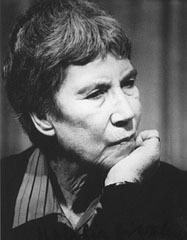
Author

Natalia Ginzburg
Natalia Ginzburg

Natalia Ginzburg was an Italian author known for her delicate psychological portrayals and profound social insights. Her works often focus on family and personal relationships, reflecting the changes in Italian society. She was born on July 14, 1916, and died on October 7, 1991. more

You May Also Like

“And just as the Witch Jadis had looked different when you saw her in our world instead of in her own, so the fruit of that mountain garden looked different too. There were of course all sorts of colored things in the bedroom; the colored counterpane on the bed, the wallpaper, the sunlight from the window, and Mother's pretty, pale blue dressing jacket. But the moment Digory took the Apple out of his pocket, all those things seemed to have scarcely any color at all. Everyone of them, even the sunlight, looked faded and dingy. The brightness of the Apple threw strange lights on the ceiling. Nothing else was worth looking at: you couldn't look at anything else. And the smell of the Apple of Youth was as if there was a window in the room that opened on Heaven.”

“Na svaku od dve šipke sa krova trole možeš da nanižeš barem troje, ako si uporan i četvoro neljubaznih penzionera, jer se njihov bezobrazluk (utemeljen na konstantnoj žurbi nikuda, koju prikazuju kao žurbu svuda) leči samo elektrošokovima, za šta pogodno dođu debeli strujni gajtani kojima se trola napaja. Naravno da samo pravljenje ovog penzoražnjića neće ubiti obezobražene, obezbožene starce očiju krvavih od želje da vladaju svetom, ne. Preživeli su ratove. Preživeli su bedu. Preživeli su i raskoš koju ti nikada nisi osetio. Preživeli su život. Sad hoće da prežive i smrt. Šipka kroz stomak nije ništa za njih. Više ih ljuti što celi komfor metalnog štapa nije samo njihov, nego se guraju sa još troje jednako pomahnitalih. Tu leži sav problem, oni žele da žive sami u zgradama, da imaju svoju privatnu trolu, svoju ličnu poštu bez redova, svoju pijacu, svoje ulice. Ljuti ih čak i to što je smrt svačija kurva. E pa danas je dan.”

“In the censored-city, our only access to the outside is through the cloud. Sometimes I feel safer here, with all the screeds of data smog and oversaturated pop culture references condensed to their basic minimum. I mean, the sheer amount of input to our system has long since exceeded our processing capacity. We all felt the same way. Spam and social media had taken over everything. I remember it, clear as day.”

“I'm always trying to do what dead people tell me. And specially when I'm making a replica, spending days looking at and feeling and listening to some prehistoric object, I'm kind of trying to think their thoughts too. I mean, it would make sense, wouldn't it, that when I really concentrate on the spaces between decorative dots or the exact tension of a twist, my mind's doing what their minds did while my hands do what their hands did.”

“Relatively homogeneous societies invest more in public goods, indicating a higher level of public altruism. For example, the degree of ethnic homogeneity correlates with the government's share of gross domestic product as well as the average wealth of citizens. Case studies of the United States find that multi-ethnic societies are less charitable and less able to cooperate to develop public infrastructure. A recent multi-city study of municipal spending on public goods in the United States found that ethnically or racially diverse cities spend a smaller portion of their budgets and less per capita on public services than do the more homogeneous cities.”

“One could not see the Greek, the Celt, the Roman, the man of the Renaissance, not even the Victorian on a white face, for Western civilisation had moved too fast to leave any telltale signs of the past on the European skin. She thought: the white face is without history: too familiar, too unremarkable – always modern. But a look at an Indian face sends the mind travelling back a thousand years. The Olmec, the Maya, the Toltec, the Mexica were still there in the coppery skin, the prominent nose, the high cheekbones, the epicanthic fold, the brown eyes staring back from the deep well of time.”