Quotessence
Home / Quotes / Quote by Bruce Catton

Quote by Bruce Catton

“Out of Bull Run would come an effort so prodigious that simply to make it would change America forever. In the dust and smoke along the Warrenton Road an era had come to an end.”

Quote by Bruce Catton

Work

The Coming Fury

Browse quotes and source details for this work. more
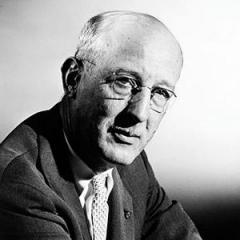
Author

Bruce Catton
Bruce Catton

Bruce Catton was an American historian renowned for his works on the American Civil War. His writing style, marked by clarity and narrative power, made complex historical events understandable to a broad audience. Catton was awarded the Pulitzer Prize for History in 1953 for his book 'The Civil War: A Narrative'. more

You May Also Like

“Haupt’s head swam at the thought of dumping this howling mob down on a battlefield. Orders were orders, to be sure, but he was enough of an army man to know that there are ways and ways of rendering obedience. He delayed the train as long as he could; then, when he finally sent it off, he wired the officer in command at Fairfax Station to arrest all who were drunk.”

“Buford didn’t dress for respect, he earned it. He didn’t try to get his name in the newspapers, instead he led with deeds that caused his men to follow his guidon with confidence and the full expectation of success.”

“However, in an attempt to rouse the dejected spirits of the troops, he directed that a ration of whiskey be issued to all ranks. Somehow the barrels were brought up in the night and the distribution made next morning. The result, in several cases - for the officers poured liberally and the stuff went into empty stomachs - were spectacular. For example, rival regiments from Pennsylvania and Massachusetts promptly decided the time had come for them to settle a long-term feud, and when a Maine outfit stepped in to try and stop the scuffle, the result was the biggest three-sided fist fight in the history of the world.”

“The whole West Woods erupted in a volcano of gunfire so heavy that the color-bearer of the 34th New York was hit five times in rapid succession before he toppled to the ground. The attack of Sedgwick’s division had turned into a crimson nightmare. Men were falling everywhere.75 As the gap widened between Greene’s Twelfth Corps brigades and Sedgwick’s left, the situation became critical. Early’s and Anderson’s Confederate brigades, along with Barksdale’s Mississippians, surged around the church, up the Hagerstown Turnpike and into the fields in the rear of Sedgwick’s hapless division.76”

“To Lt. Alonzo H. Cushing and his men, the first sign of Hooker’s intention to abandon the Fredericksburg-Falmouth front came in the form of a telegram received at Second Corps headquarters on June 6, which directed that the soldiers of the corps have three days’ rations in their haversacks, and that all wagons be loaded with stores and the trains put in readiness for any order to move. The order, the telegram stated, “may possibly be given to move early tomorrow.”8”

“Wadsworth was riding at the front of the 20th Massachusetts along the Plank Road when the 8th Alabama fired its first volley (No. 1). The flash and surprise stunned his mount, and with Wadsworth pulling on the reins his horse headed straight for the Confederate lines. The division commander gained control of the horse before it entered the enemy’s ranks and was spurring his mount back toward the Bay Staters when a round of small arms fire exploded around him. One of the bullets slammed into his head and sprayed brain matter onto an aide riding next to him, who maintained enough presence of mind to dismount and catch the general as he fell from his horse. After carefully lowering Wadsworth to the ground, the aide concluded the general had been killed instantly, hopped onto the general’s horse, and galloped to safety.”

“The whole scene so reeked of penny romance that it bordered on the ludicrous . . . It was all really happening, but more like fiction come to life, a Waverly novel gone mad. Years later, Mark Twain would only half in jest propose that the American Civil War was to be blamed on Sir Walter Scott, that the people of the South had somehow persuaded themselves that the mythical era of gallant knights and fair damsels of Ivanhoe had come to life in Dixie.”