Quotessence
Home / Quotes / Quote by Hanif Kureishi

Quote by Hanif Kureishi

“What idiots we were! How misinformed! Why didn't we understand that we were happily condemning ourselves to being nothing better than motor-mechanics? Why couldn't we see that? For Eleanor's crowd hard words and sophisticated ideas were in the air they breathed from birth, and this language was the currency that bought you the best of what the world could offer. But for us it could only ever be a second language, consciously acquired.”

Quote by Hanif Kureishi

Work

The Buddha of Suburbia

Browse quotes and source details for this work. more

Author
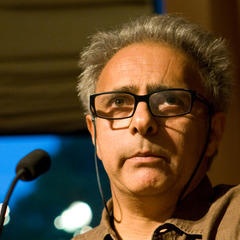
Hanif Kureishi
Hanif Kureishi

Hanif Kureishi is a distinguished British playwright, screenwriter, and author, born on December 5, 1954. He has made substantial contributions to literature and theater with his distinctive voice and insightful exploration of contemporary issues. Kureishi's work often delves into themes of multiculturalism, identity, and social class, reflecting his own experiences growing up in a diverse community. more

You May Also Like

“You are a little chubby - doesn't matter. You are a little skinny - doesn't matter. You don't know any table etiquette - doesn't matter. You prefer jeans over tuxedo - doesn't matter. You have tattoos all over your body - doesn't matter. You don't have a tag hanging from your neck saying religious - doesn't matter. What matters is, how you behave with those whom the society has placed at the bottom of its egotistical, megalomaniacal and barbaric hierarchy of class and pedigree.”

“Leaders and disciples, queens and subjects, preachers and pupils - all these are a sign of a sectarian society, all these are a sign of a sick society. No queen, no subject - no leader, no disciple - in love all are one, one is all.”

“I knew the houses were to be searched; and I expected it would be done by country bullies and the poor whites. I expected I knew nothing annoyed them so much as to see colored people living in comfort and respectability; so I made arrangements for them with especial care.... It was a grand opportunity for the low whites, who had no negroes of their own to scourge. They exulted in such a chance to exercise a little brief authority, and show their subserviency to the slaveholders; not reflecting that the power which trampled on the colored people also kept themselves in poverty, ignorance, and moral degradation.”

“Under the old order, which enabled those whose lives were secure to play the fools and eccentrics at the expense of the others while the majority led a wretched existence, it had been only too easy to mistake the foolishness and idleness of a privileged minority for genuine character and originality. But the moment the lower classes had risen, and the privileges of those on top had been abolished, how quickly had those people faded, how unregretfully had they renounced independent ideas--apparently no one had ever had such ideas!”

“The last time the "best and brightest" got control of the country, they dragged it into a protracted, demoralizing war in Southeast Asia, from which the country has still not fully recovered. Yet Reich seems to believe that a new generation of Whiz Kids can do for the faltering American economy what Robert McNamara's generation failed to do for American diplomacy: to restore, through sheer brainpower, the world leadership briefly enjoyed by the United States after World War II and subsequently lost not, of course, through stupidity so much as through the very arrogance the "arrogance of power," as Senator William Fulbright used to call it to which the "best and brightest" are congenitally addicted. This arrogance should not be confused with the pride characteristic of aristocratic classes, which rests on the inheritance of an ancient lineage and on the obligation to defend its honor. Neither valor and chivalry nor the code of courtly, romantic love, with which these values are closely associated, has any place in the world view of the best and brightest. A meritocracy has no more use for chivalry and valor than a hereditary aristocracy has for brains. Although hereditary advantages play an important part in the attainment of professional or managerial status, the new class has to maintain the fiction that its power rests on intelligence alone. Hence it has little sense of ancestral gratitude or of an obligation to live up to responsibilities inherited from the past. It thinks of itself as a self-made elite owing its privileges exclusively to its own efforts. Even the concept of a republic of letters, which might be expected to appeal to elites with such a large stake in higher education, is almost entirely absent from their frame of reference.”