Quotessence
Home / Quotes / Quote by Patrick White

Quote by Patrick White

Work

Riders in the Chariot

Browse quotes and source details for this work. more

Author
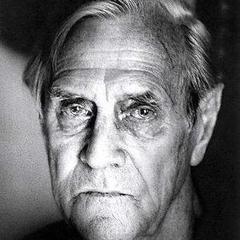
Patrick White
Patrick White

Patrick White was an Australian writer renowned for his unique literary style and profound social insight. His works often explore the relationship between individuals and society, as well as the respect for Indigenous Australian culture. White's writing has received international recognition, including the Nobel Prize in Literature in 1973. more

You May Also Like

“Recent events in the Middle East and North Africa clearly show just how dangerous the world is, and how great the challenges facing the intelligence community are going to be in the future as threats to U.S. national security continuously evolve. The U.S. intelligence community did not foresee the sudden collapse of the pro-U.S. regimes in Egypt and Tunisia, the eruption of a civil war in Libya, and the escalating wave of street protests across the Middle East. Then again, no one else in the U.S. government or among our allies abroad did either.”

“Somehow one feels unfettered by any of the harsh, restricting influences of human existence as we live it these days. There are no buildings, no roads, no street lights, no artificial or even natural noises, no hustle and bustle, no need for anyone to shout or to have money or to pretend about anything; those human beings who are with you are probably fairly well known to you, and are there for the same reason that you are—they know the dangers and delights of solitude just the same as you do, and they will react to the unblemished and staggering loveliness of a huge expanse of desert sky, deep blue by day and of a marvellous purple at night sprinkled haphazardly with hundreds and thousands of stars silently lighting up that great canopy of night-time that drifts down with the close of day. I personally think I know of nothing more restorative than lying on the soft sand—cool now after the retirement of the day’s sun— and just staring at the miracle of such a sky. And then you fall asleep, rolled up in a sleeping bag against the considerable fall in temperature as the night goes on, perhaps waking an hour or two before dawn for just long enough to notice that those little stars are still there—as bright as ever—and do not even look as though they are getting ready to be extinguished by the advent of another day. It is a lovely, comforting feeling when the world around you is quite still; and there is no sound anywhere to penetrate the delightful peace that surrounds you. When the dawn comes, and the stars have all gone away, there is something sharp and exhilarating about the smell in the air. It is fresh and clean and tantalisingly different to the atmosphere which will pervade the day once the sun has come up over the distant horizon. Then there will be no escape from its merciless and desiccating heat, which drains you of energy and leaves you burned and incapable of any prolonged activity. And the bright reflection of the sun off the light-coloured sand can be piercing and painful to the eyes. There is probably not even a tiny breeze to move that sullen, sultry air, and there can be no relief from its effects until once more, and inevitably, the great ball of fire that is the sun will slide slowly below the land and allow it to grow cool. It would be foolish to pretend that all of those who served with the LRDG saw the desert in the way that I have described it, all or even much of the time. But I am quite sure that when their minds were not diverted by rather more pressing considerations concerning the enemy, there were few who were not moved by the beauty of the sky at night. They all spent quite a number of hours on sentry duty, when, alone with his thoughts and in such surroundings, no man can be oblivious of such a miraculous revelation.”