Quotessence
Home / Quotes / Quote by John Stuart Mill

Quote by John Stuart Mill

“The Germans and Carlyle have perverted both thought and phraseology when they made the Artist the term for expressing the highest order of moral and intellectual greatness. The older idea is the truer- that Art, in relation to Truth, is but a language. Philosophy is the proper name for that exercise of the intellect which enucleates the truth to be expressed. The Artist is not the Seer; not he who can detect truth, but he who can clothe a given truth in the most expressive and impressive symbols.”

Quote by John Stuart Mill

Work

Collected works of John Stuart Mill

The Collected Works of John Stuart Mill is a compilation of essays, treatises, and lectures written by the influential figure. It encompasses his major writings on liberty, Utilitarianism, and the role of government in society. This collection offers a deep dive into Mill's philosophical and economic thought, providing insight into his contributions to classical liberalism and his advocacy for individual rights and social progress. more

Author
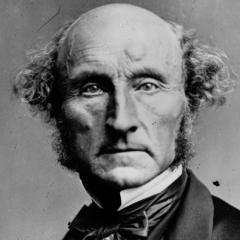
John Stuart Mill
John Stuart Mill

John Stuart Mill was an influential British philosopher, economist, and logician. He is one of the most important figures in 19th-century philosophy and his ideas had a profound impact on political, social, and philosophical thought of the time. more

You May Also Like

“Museums of primitive art are filled with masks, figurines, bas-relief sculptures, all looted from all over the world and robbed of their meanings. For those who created them, life resided not in the object itself, but rather in the spirit that inspired it. A corpse, even one artistically entombed, is still a dead body. They are no longer works of art, but simply objects. They are beautiful, whereas they should be alive, From time immemorial, humans have sculpted to magnify their gods. There is a reason why some religions are against any depiction of their gods while others are committed to the practice. There is some form of highly human insolence in recreating the god that created you, and there is a risk of adoring the tangible representation in itself instead of the discarnate deity. That is what sculpture is: both a tribute and a challenge to the gods. Some spiritualities tolerate this ambivalence, others don't. Others yet use representations to further tighten control over their flock and guarantee their submissiveness. They select the artists and dictate the dogma they should represent. Sculpture is both the easiest and the most delicate of art forms. It is more than just hewing a form out of a compact block, or reproducing a model: you have to breathe life into It. That is not something you can learn or improvise. There is always some part of yourself that you infuse into the material. In our modern world, where art is a business like any other, techniques are taught, but the magic, on the other hand, is still a gift, midway between bliss and suffering.”

“He got out a sapphire mark for light, avoiding pools of water strewn with bones. A skull protruded from one, wavy green moss growing across the scalp like hair, lifespren bobbing above. Perhaps it should have felt eerie to walk through these darkened slots alone, but they didn’t bother Kaladin. This was a sacred place, the sarcophagus of the lowly, the burial cavern of bridgemen and spearmen who died upon lighteyed edicts, spilling blood down the sides of these ragged walls. This place wasn’t eerie; it was holy.”