Quotessence
Home / Quotes / Quote by Bruce Catton

Quote by Bruce Catton

“The whole brigade took a queer, perverse pride in the regimental band of the 6th Wisconsin—not because it was so good, but because it was so terrible. It was able to play only one selection, something called “The Village Quickstep,” and its dreadful inefficiency (the colonel referred to it in his memoirs as “that execrable band”) might have been due to the colonel’s quaint habit of assigning men to the band not for musical ability but as punishment for misdemeanors—or so, at least, the regiment stoutly believed. The only good thing about the band was its drum major, one William Whaley, who was an expert at high and fancy twirling of his baton. At one review, in camp around Washington, the brigade had paraded before McClellan, who had been so taken with this drum major’s “lofty pomposity” (as a comrade described it) that he took off his cap in jovial salute—whereupon the luckless Whaley, overcome by the honor, dropped his baton ignominiously in the mud, so that his big moment became a fizzle.4”

Quote by Bruce Catton

Work

Mr. Lincoln's Army

Browse quotes and source details for this work. more

Author
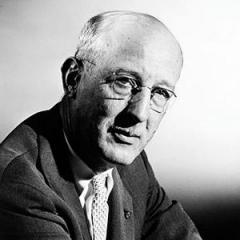
Bruce Catton
Bruce Catton

Bruce Catton was an American historian renowned for his works on the American Civil War. His writing style, marked by clarity and narrative power, made complex historical events understandable to a broad audience. Catton was awarded the Pulitzer Prize for History in 1953 for his book 'The Civil War: A Narrative'. more

You May Also Like

“Kearny had probably seen more fighting than any man on the field. He had served in Mexico as a cavalry captain; had remarked, in youthful enthusiasm, that he would give an arm to lead a cavalry charge against the foe. He got his wish, at the exact price offered, a few days later, leading a wild gallop with flashing sabers and losing his left arm. He once told his servant: “Never lose an arm; it makes it too hard to put on a glove.”

“and he became a communist. He was court-martialed but allowed to resign from the army. In the revolutions of 1848 he fought to overthrow his king and, failing, fled to America. There he became first a carpenter and then the editor of a German-language newspaper in Cincinnati with a slant so leftist he earned the nickname "Reddest of the Red." When the Civil War came, Willich recruited fifteen hundred Cincinnati Germans within a matter of hours and helped organize the Ninth Ohio-now marching with the XIV Corps.”

“Both realized the political consequences of allowing the resignation of the first general to beat Robert E. Lee on the battlefield.”

“Without having planned it—and without any official sanction—Chamberlain suddenly gave the order for Union soldiers to “carry arms” as a sign of their deepest mark of military respect. A bugle call instantly rang out. All along the road, Union soldiers raised their muskets to their shoulders, the salute of honor.”

“Reflecting on this order, which lays out a job of work and breathes the very spirit of unhurried calm, one is conscious of that queer feeling of exasperation which, even at this distance, McClellan's acts occasionally inspire. With everything in the world at stake, both for the country and for McClellan personally, why couldn't the man have taken fire just once?”

“In the midst of a grueling all-night march on October 6, the men of the 10th Indiana demonstrated that they had not lost their high spirits. They were taking a brief midnight break, many of them sleeping where they had stopped on either side of the road, when "General" Charles Gilbert came riding through with his staff and demanded that the exhausted troops form up and salute him properly. Colonel William Kise told Gilbert that after marching day and night for a week, "he would not hold dress parade at midnight for any d-d fool living'; the only salute the men offered was to jeer and apply their bayonets to the hindquarters of the horses of Gilbert and his staff, who continued down the road rather more promptly than they had come.”