Quotessence
Home / Quotes / Quote by William Butler Yeats

Quote by William Butler Yeats

“Folk art is, indeed, the oldest of the aristocracies of thought, and because it refuses what is passing and trivial, the merely clever and pretty, as certainly as the vulgar and insincere, and because it has gathered into itself the simplest and most unforgettable thoughts of the generations, it is the soil where all great art is rooted. Wherever it is spoken by the fireside, or sung by the roadside, or carved into the lintel, appreciation of the arts that a single mind gives unity and design to, spreads quickly when its hour is come.”

Quote by William Butler Yeats

Work

The Celtic Twilight

This book is a compilation of essays that delve into the rich cultural heritage and artistic expressions of Celtic societies during the late 19th century. It offers insights into the folklore, literature, and music of the Celtic world, providing a comprehensive view of the cultural landscape of the time. more

Author

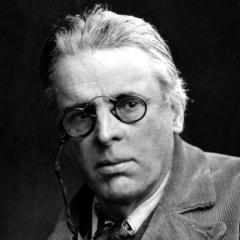
William Butler Yeats

William Butler Yeats was an Irish poet, dramatist, and essayist, considered one of the greatest poets of the 20th century. His poetry deeply reflected the nationalist sentiments of Ireland and also showcased rich imagination and profound philosophical thinking. Yeats' poetic style was versatile, evolving from early romanticism to late symbolism, and his works have had a profound impact on literature both in Ireland and around the world. more

You May Also Like

“People, especially elders, repeat stories over and over again with purpose. In the arrogance of youth, we often think they do I because they are absent-minded. Now I know they repeat themselves because they’ve whittled like down into observations that should not be forgotten. They are authoring scriptures of their own.”

“We stayed two more days in Kurkurast, getting well fed and rested, waiting for a road-packer that was due in from the south and would give us a lift when it went back again. Our hosts got Estraven to tell them the whole tale of our crossing the Ice. He told it as only a person of an oral-literature tradition can tell a story, so that it becomes a saga, full of traditional locations and even episodes, yet exact and vivid, from the sulphurous fire and dark of the pass between Drumner and Dremegole to the screaming gusts from the mountain-gaps that swept the Bay of Guthen; with comic interludes, such as his fall into the crevasse, and mystical ones, when he spoke of the sounds and silences of the Ice, of the shadowless weather, of the night's darkness. I listened as fascinated as all the rest, my gaze on my friend's dark face.”

“It’s about Nietzsche’s theory of universal debt. Your parents make it possible for you to believe a far better myth than Santa. They let you think that you, as a kid, don’t owe the world a thing. The world can give you, even if just for a few minutes, utter joy without requiring anything from you. It’s not about consumerism. As far as you know, no one buys you these presents. They come out of nothingness, with fantasies of elves attached. You aren’t required to be grateful to your parents or anything like that. They can give to you and nothing is required in return. When you get old enough, when you have kids, you get to enact this myth for them. It has nothing to do with any fat man in a red suit, no matter what we tell ourselves. It’s about owing nothing, and then realizing that you have to do this job of perpetuating this… this fantasy world, whether you like it or not.”