Quotessence
Home / Quotes / Quote by Leonard Cohen

Quote by Leonard Cohen

“Bind me to your will, bind me with these threads of sorrow, and gather me out of the afternoon where I have torn my soul on twenty monstrous altars, offering all things but myself.”

Quote by Leonard Cohen

Work

Book of Mercy

This novel delves into the concept of mercy, examining its manifestations and implications across different scenarios and relationships. more
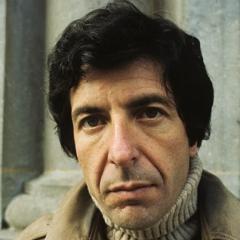
Author

Leonard Cohen
Leonard Cohen

Leonard Cohen, a renowned Canadian singer-songwriter, is celebrated for his profound lyrics and distinctive voice. His musical career spanned over half a century, encompassing a variety of styles from folk to rock and jazz. Cohen's music and poetry have been beloved by fans worldwide, and he is regarded as one of the most influential musicians of the 20th century. more

You May Also Like

“You see all the other fellows were so active and earnest and all that sort of thing- always rampaging, and skirmishing, and scouring the desert sands, and pacing the margin of the sea, and chasing knights all over the place, and devouring damsels, and going on generally- whereas I liked to get my meals regular and then to prop my back against a bit of rock and snooze a bit, and wake up and think of things going on and how they kept going on just the same, you know!”

“There was a time in my life when I did a fair bit of work for the tempestuous Lucretia Stewart, then editor of the American Express travel magazine, Departures. Together, we evolved a harmless satire of the slightly driveling style employed by the journalists of tourism. 'Land of Contrasts' was our shorthand for it. ('Jerusalem: an enthralling blend of old and new.' 'South Africa: a harmony in black and white.' 'Belfast, where ancient meets modern.') It was as you can see, no difficult task. I began to notice a few weeks ago that my enemies in the 'peace' movement had decided to borrow from this tattered style book. The mantra, especially in the letters to this newspaper, was: 'Afghanistan, where the world's richest country rains bombs on the world's poorest country.' Poor fools. They should never have tried to beat me at this game. What about, 'Afghanistan, where the world's most open society confronts the world's most closed one'? 'Where American women pilots kill the men who enslave women.' 'Where the world's most indiscriminate bombers are bombed by the world's most accurate ones.' 'Where the largest number of poor people applaud the bombing of their own regime.' I could go on. (I think number four may need a little work.) But there are some suggested contrasts for the 'doves' to paste into their scrapbook. Incidentally, when they look at their scrapbooks they will be able to re-read themselves saying things like, 'The bombing of Kosovo is driving the Serbs into the arms of Milosevic.”

“I'm done doing this!' Obama said, finally erupting. 'We've all agreed on a plan. And we're all going to stick to that plan. I haven't agreed to anything beyond that.' The 30,000 was a 'hard cap,' he said forcefully. 'I don't want enablers to be used as wiggle room. The easy thing for me to do - politically - would actually be to say no' to the 30,000. Then he gestured out the Oval Office windows, across the Potomac, in the direction of the Pentagon. Referring to Gates and the uniformed military, he said. 'They think it's the opposite. I'd be perfectly happy -' He stopped mid-sentence. 'Nothing would make Rahm happier than if I said no to the 30,000.' There was some subdued laughter. 'Rahm would tell me it'd be much easier to do what I want to do by saying no,' the president said. He could then focus on the domestic agenda that he wanted to be the heart of his presidency. The military did not understand. 'Politically, what these guys don't get is it'd be a lot easier for me to go out and give a speech saying, 'You know what? The American people are sick of this war, and we're going to get out of there.”

“During an hour-long conversation mid-flight, he laid out his theory of the war. First, Jones said, the United States could not lose the war or be seen as losing the war. 'If we're not successful here,' Jones said, 'you'll have a staging base for global terrorism all over the world. People will say the terrorists won. And you'll see expressions of these kinds of things in Africa, South America, you name it. Any developing country is going to say, this is the way we beat [the United States], and we're going to have a bigger problem.' A setback or loss for the United States would be 'a tremendous boost for jihadist extremists, fundamentalists all over the world' and provide 'a global infusion of morale and energy, and these people don't need much.' Jones went on, using the kind of rhetoric that Obama had shied away from, 'It's certainly a clash of civilizations. It's a clash of religions. It's a clash of almost concepts of how to live.' The conflict is that deep, he said. 'So I think if you don't succeed in Afghanistan, you will be fighting in more places. 'Second, if we don't succeed here, organizations like NATO, by association the European Union, and the United Nations might be relegated to the dustbin of history.' Third, 'I say, be careful you don't over-Americanize the war. I know that we're going to do a large part of it,' but it was essential to get active, increased participation by the other 41 nations, get their buy-in and make them feel they have ownership in the outcome. Fourth, he said that there had been way too much emphasis on the military, almost an overmilitarization of the war. The key to leaving a somewhat stable Afghanistan in a reasonable time frame was improving governance and the rule of law, in order to reduce corruption. There also needed to be economic development and more participation by the Afghan security forces. It sounded like a good case, but I wondered if everyone on the American side had the same understanding of our goals. What was meant by victory? For that matter, what constituted not losing? And when might that happen? Could there be a deadline?”