Quotessence
Home / Quotes / Quote by Charlotte Perkins Gilman

Quote by Charlotte Perkins Gilman

Work

The Yellow Wallpaper

Browse quotes and source details for this work. more
Author

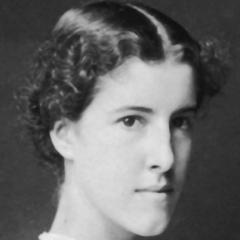
Charlotte Perkins Gilman

Charlotte Perkins Gilman was an American novelist, social reformer, and feminist. Her works explored the status of women in society, family, and career, and had a profound impact on women's literature and social movements. more

You May Also Like

“There's a reason why men didn't see fit to allow women equal rights for so long, and why women were put through medical and sexual torture, force-fed, starved, lobotomised, incarcerated, why they were even burnt at the stake as witches, before basic human rights were granted to them. Something's gone wrong with men-kind. whether it's nature or nurture, time will tell, but their fury and violence towards non-submissive women is a chronic epidemic that comes in waves. This is your wave. We need you to fight in our corner, not theirs.”

“Transactivists claim that no man would go through the 'ordeal' of falsely claiming to identify as a woman, but is saying 'I'm a woman' in a society where everyone is treated as a hateful bigot unless they unquestioningly honour that statement really that difficult?”

“People who suffer oppression for their bodies, such as ethnic minorities, women, and the disabled, don't have the luxury to identify out of it. Yet, our institutions continue to promote the belief that the most oppressed group in history consists of healthy and often privileged people - such as white middle class men - who are self identifying into oppressed groups using the phrase 'born in the wrong body'. Thanks to not suffering the same limitations experienced by groups they wish to be part of, they exert immense influence on the regulators and these communities, where they position themselves as leaders and spokespeople. They are then redefining the aims and priorities of these groups and preventing genuine members from freely discussing issues that affect them.”

“Their idea of what it means to live a life in a female body is informed by the male gaze, gender stereotypes and porn. This is why their fantasy recreation of a woman hardly ever involves being paid less, doing unpaid domestic labour or being ignored. Instead they are drawn to the stereotype of beautiful bimbos whose lives are easy and filled with acceptance, slumber parties, gossiping in female toilets, colouring each other's hair and prancing around in sexy lingerie and fluffy slippers.”

“How can a man know what being a female feels like, when he's not female? The answer is - he can't. He can only have an idea based on the way he perceives the opposite sex, and since every man has his own ideas, this makes the definition of 'woman' illusive. What's more, given that men have traditionally viewed women as weak, submissive and empty headed sex objects who wear dresses, makeup and have long hair, men who claim to be women often emulate feminine gender stereotypes in order to substantiate their claim to womanhood.”

“No other technique for the conduct of life attaches the individual so firmly to reality as laying emphasis on work; for his work at least gives him a secure place in a portion of reality, in the human community. The possibility it offers of displacing a large amount of libidinal components, whether narcissistic, aggressive or even erotic, on to professional work and on to the human relations connected with it lends it a value by no means second to what it enjoys as something indispensible to the preservation and justification of existence in society. Professional activity is a source of special satisfaction if it is a freely chosen one — if, that is to say, by means of sublimation, it makes possible the use of existing inclinations, of persisting or constitutionally reinforced instinctual impulses. And yet, as a path to happiness, work is not highly prized by men. They do not strive after it as they do after other possibilities of satisfaction. The great majority of people only work under the stress of necessity, and this natural human aversion to work raises most difficult social problems.”