Quotessence
Home / Quotes / Quote by Cornel West

Quote by Cornel West

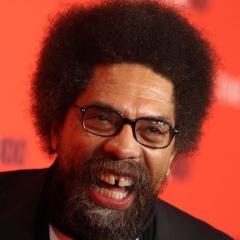
“If there were social democratic redistributive measures that wiped out black poverty, and if racial and sexual discrimination could be abated through the good will and meritorious judgments of those in power, affirmative action would be unnecessary. Although many of my liberal and progressive citizens view affirmative action as a redistributive measure whose time is over or whose life is no longer worth preserving, I question their view because of the persistence of discriminatory practices that increase black social misery, and the warranted suspicion that good will and fair judgment among the powerful does not loom as large toward women and people of color.”

Quote by Cornel West

Work

Race Matters

Analyzing the impact of race on American society, this book delves into the historical and contemporary aspects of racial inequality and discrimination. more

Author

Cornel West
Cornel West

Cornel West is a renowned American philosopher, political activist, and author. He is known for his profound insights into race, class, and culture, particularly on issues of American society and politics. His writings and speeches often delve into themes of justice, freedom, and democracy. more

You May Also Like

“The dilemma facing Bush and the Republicans was clear. If Marshall left, they could not leave the Supreme Court an all-white institution; at the same time, they had to choose a nominee who would stay true to the conservative cause. The list of plausible candidates who fit both qualifications pretty much began and ended with Clarence Thomas. … There was awkwardness about the selection from the start. "The fact that he is black and a minority has nothing to do with this," Bush said. "He is the best qualified at this time." The statement was self-evidently preposterous; Thomas had served as a judge for only a year and, before that, displayed few of the customary signs of professional distinction that are the rule for future justices. For example, he had never argued a single case in any federal appeals court, much less in the Supreme Court; he had never written a book, an article, or even a legal brief of any consequence. Worse, Bush's endorsement raised themes that would haunt not only Thomas's confirmation hearings but also his tenure as a justice. Like the contemporary Republican Party as a whole, Bush and Thomas opposed preferential treatment on account of race—and Bush had chosen Thomas in large part because of his race. The contradiction rankled.”

“The new black conservatives assume that without affirmative action programs, white Americans will make choices on merit rather than on race. Yet they have adduced no evidence for this. Most Americans realize that job-hiring choices are made both on reasons of merit and on personal grounds. And it is this personal dimension that is often influenced by racist perceptions. Therefore the pertinent debate regarding black hiring is never "merit vs. race" but whether hiring decisions will be based on merit, influenced by race-bias against blacks, or on merit, influenced by race-bias, but with special consideration for minorities and women, as mandated by law. In light of actual employment practices, the black conservative rhetoric about race-free hiring criteria (usually coupled with a call for dismantling affirmative action mechanisms) does no more than justify actual practices of racial discrimination.”

“The prevailing discriminatory practices during the sixties, whose targets were working people, women, and people of color, were atrocious. Thus, an enforceable race-based -- and later gender based -- affirmative action policy was the best possible compromise and concession. Progressives should view affirmative action as neither a major solution to poverty nor a sufficient means to equality. We should see it as primarily playing a negative role -- namely, to ensure that discriminatory practices against women and people of color are abated. Given the history of this country, it is a virtual certainty that without affirmative action, racial and sexual discrimination would return with a vengeance. Even if affirmative action fails significantly to reduce black poverty or contributes to the persistence of racist perceptions in the workplace, without affirmative action, black access to America's prosperity would be even more difficult to obtain and racism in the workplace would persist anyway.”

“The Indian government spent millions of rupees annually developing housing and job opportunities in villages heavily inhabited by untouchables. Moreover, the prime minister said, if two applicants compete for entrance into a college or university, one of the applicants being an untouchable and the other of high caste, the school is required to accept the untouchable. Professor Lawrence Reddick, who was with me during the interview, asked: “But isn’t that discrimination?” “Well, it may be,” the prime minister answered. “But this is our way of atoning for the centuries of injustices we have inflicted upon these people.”

“Page 5-6: The elected branches in the liberal breakthrough of 1964-65 passed three great civil rights laws: the Civil Rights Act of 1964, the Voting Rights Act of 1965, and the Immigration and Naturalization Act of 1965. All were based on the principle of nondiscrimination by race or national origin. … The Immigration and Naturalization Act ended a long-standing policy, so repugnant to liberal values and so embarrassing in cold war competition, of immigration quotas by national origin preference. … Then came the unintended consequences of reform. Government agencies and federal courts approved affirmative action policies, based ironically on the nondiscrimination laws of 1964-65, that imposed preferences, justified to compensate for past discrimination and designed to win proportional representation for minority groups in education, jobs, and government contracts. Similarly, in immigration policy, the reforms of 1965, intended to purge national origin quotas but not to expand immigration or to change its character, produced instead a flood of new arrivals that by the mid-1990s exceeded 30 million people, more than three-quarters of them arriving not from Europe but from Latin America and Asia. Despite the purging of racial and ethnic preferences by the 1964-65 laws, the ancestry of most immigrants in the 1990s entitled them to status as presumptive victims of historic discrimination in the united states. As members of protected classes, they enjoyed priority over most native-born Americans under affirmative action regulations.”