Quotessence
Home / Quotes / Quote by Muriel Spark

Quote by Muriel Spark

“I am pleased that you are so fully convinced of my candour, for to know that you suspected me of a deficiency in this virtue would grieve and mortify me beyond expression. I do not derive any merit from the possession of it, for in me it is constitutional. Yet I think where it is possessed it will rarely exist alone, and where it is wanted there is reason to doubt the existence of almost every other virtue.”

Quote by Muriel Spark

Work

The Essence of the Brontës: A compilation with essays

Browse quotes and source details for this work. more

Author
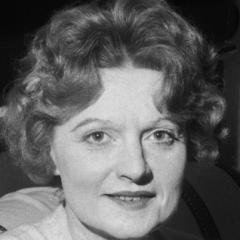
Muriel Spark
Muriel Spark

Muriel Spark was a Scottish author known for her wit and sharp social commentary. Born on February 1, 1918, in Edinburgh, Scotland, she passed away on April 13, 2006. Spark's writing often delved into themes of identity, morality, and the human condition, with her novel 'The Prime of Miss Jean Brodie' being one of her most celebrated works. more

You May Also Like

“Who would appreciate such candor? No one. None of us really likes honesty. We prefer deception –but only when it is unabashedly flattering or artfully camouflaged. Groups seem to need to believe that they are superior to others and that they have a purpose greater than just passing along their genes to the next generation. Individuals seem to need similar delusions – about who they are and why they do what they do. They need heroes, however fraudulent… Studies show that people are more likely to accept the opinion of a confident con man than the cautious view of someone who actually knows what he is talking about. And professionals who form overconfident opinions on the basis of incorrect readings of the facts are more likely to succeed than their more competent peers who display greater doubt. What’s more, deception works best, according to studies by psychologists, when the person doing the deceiving is fool enough to be deceived, too; that is, when he believes his own lies. That is why incompetent leaders – who are naïve enough to fall for their own guff – are such a danger to civilized life. If they are modern leaders, they must also delude themselves into thinking they know how to make the world a better place. Invariably, the answers they propose to problems are ones that bubble up from their own vanity, the essence of which is to make the rest of the world look just like them!”

“I continue to marvel at the reluctancy of people to look into the mirror and see all the darkness that's within them: all the deceit, the dishonesty, the insincerity, the lack, the need, the want, the lies...they would rather look upon the mural of themselves that they've painted on the wall, and stare at that inanimate portrait of beauty, all the while telling themselves that it is the mirror image of them! This is a falsity, this is unreal! It is only when you turn to the unveiled mirror and bravely face your light and your darkness at once, that you will be able to see the true image of you! How can you pull the thorns from your skin if you are too afraid to open your eyes and look at them? You must open your eyes first, look at the thorns where they are piercing your flesh, and only then can you pull them out!”

“Peace is not so much a political mandate as it is a shared state of consciousness that remains elevated and intact only to the degree that those who value it volunteer their existence as living examples of the same... Peace ends with the unraveling of individual hope and the emergence of the will to worship violence as a healer of private and social dis-ease.”

“Since the fall of the Berlin Wall in 1989, historians have become both more accurate and more honest—fractionally more brave, one might say—about that 'other' cleansing of the regions and peoples that were ground to atoms between the upper and nether millstones of Hitlerism and Stalinism. One of the most objective chroniclers is Professor Timothy Snyder of Yale University. In his view, it is still 'Operation Reinhardt,' or the planned destruction of Polish Jewry, that is to be considered as the centerpiece of what we commonly call the Holocaust, in which of the estimated 5.7 million Jewish dead, 'roughly three million were prewar Polish citizens.' We should not at all allow ourselves to forget the millions of non-Jewish citizens of Belarus, Russia, Ukraine, and other Slav territories who were also massacred. But for me the salient fact remains that anti-Semitism was the regnant, essential, organizing principle of all the other National Socialist race theories. It is thus not to be thought of as just one prejudice among many.”

“When we look back from the vantage point of sobriety, many of us realize that when drinking we often felt like a fake, a fraud, and a phony. That’s because we were. – p. 74”