“...the following parable may be useful. Long ago, when shepherds wanted to see if two herds of sheep were isomorphic, they would look for an explicit isomorphism. In other words, they would line up both herds and try to match each sheep in one herd with a sheep in the other. But one day, along came a shepherd who invented decategorification. She realized one could take each herd and ‘count’ it, setting up an isomorphism between it and some set of ‘numbers’, which were nonsense words like ‘one, two, three, . . . ’ specially designed for this purpose. By comparing the resulting numbers, she could show that two herds were isomorphic without explicitly establishing an isomorphism! In short, by decategorifying the category of finite sets, the set of natural numbers was invented. According to this parable, decategorification started out as a stroke of mathematical genius. Only later did it become a matter of dumb habit, which we are now struggling to overcome by means of categorification.”
Quote by John C. Baez
Author
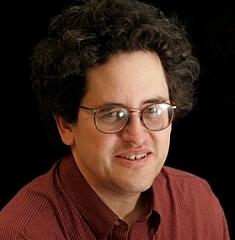
John C. Baez
John C. Baez, born on June 12, 1961, is a renowned physicist. He has made significant contributions to the field of mathematical physics, particularly in category theory, quantum field theory, and cosmology. Professor Baez teaches at the University of California, San Diego, and is known for his contributions to science education and popularization. more
You May Also Like
Source: Ducks, Newburyport
Source: Notable American Women
Source: The Autobiography of George Müller
Source: Men and Apparitions
Source: Census
Source: Trickster Makes This World: Mischief, Myth, and Art
“One can see the world leaders, in two categories; to dictate others or to be dictated by others.”