Quotessence
Home / Quotes / Quote by Marilyn French

Quote by Marilyn French

“Unlike men, women have not, until the feminist movement had sex based solidarity the isolation is not incidental; solidarity is what men have feared most in women. To prevent its formation, every state we know about separated women from each other, imprisoning them in the home, where they were under the direct surveillance of husbands or kin. When women began to ally with each other and to politic during the French revolution, men barred female assembly. In India today, men suspiciously eye women who gather at wells or pumps. Women are afraid to speak to each other, although no law forbids it. Simply making men central, by making them necessary to survival, is enough to set women against each other.”

Quote by Marilyn French

Work

From Eve to Dawn: A History of Women in the World, Vol. 1

Browse quotes and source details for this work. more

Author
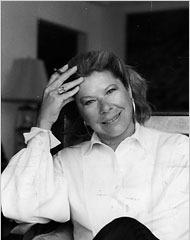
Marilyn French
Marilyn French

Marilyn French, born on November 21, 1929 and died on May 2, 2009, was a prominent American author known for her feminist perspective in her works. Her writings focused on the status of women in society, family, and sexuality, with notable works including 'The Feminine Mystique'. more

You May Also Like

“In 381 Theodosius I organised the Council of Constantine, which proclaimed the doctrine of the Trinity: Father, Son, and Holy Spirit are of the same substance, consubstantial, one person comprising god. The doctrine went even further than Greek myth in eliminating the female from the godhead. The Christian father-god utters the Word, his son, and procreates through language, entirely without a woman. The holy spirit is born from the mutual love of son and father. This creation is not incest because bodies are not involved. The Trinity, understandably called a mystery, lies at the heart of Christianity. It achieves two major goals: it posits a realm that transcends the physical world, in which reality is made by the word. History is filled with rules who claim divinity to justify their superiority, but not until Christianity and the sacralising of the notion that language creates reality does the debate between appearance and reality begin to pervade Western literature and thought. [...] the Trinity procreates without the female - without body, blood, ooze, without nature, and superior to it. Generations of clerical writers, wishing that women did not exist, lament that this sort of procreation was possible only to god. The church defined the divine realm in opposition to the earthly one, celebrating birth through utterance, death as life, the overcoming of sex and body, a realm where nothing changes and power and justice are one.”

“Everywhere, men base their claim to superiority on a connection with the deity that women lack. During the period of state formation, women lost the right to perform rites of worship. This denial led to the devaluation of female children and the exclusion of women from property rights.”

“There is only one way for women to reach full human potential—by participating in the mainstream of society, by exercising their own voice in all the decisions shaping that society. For women to have full identity and freedom, they must have economic independence. Breaking through the barriers that had kept them from the jobs and professions rewarded by society was the first step, but it wasn’t sufficient. It would be necessary to change the rules of the game to restructure professions, marriage, the family, the home. The manner in which offices and hospitals are structured, along the rigid, separate, unequal, unbridgeable lines of secretary/executive, nurse/doctor, embodies and perpetuates the feminine mystique. But the economic part would never be complete unless a dollar value was somehow put on the work done by women in the home, at least in terms of social security, pensions, retirement pay. And housework and child rearing would have to be more equally shared by husband, wife, and society. Equality and human dignity are not possible for women if they are not able to earn. When the young radical kids came into the movement, they said it was “boring” or “reformist” or “capitalist co-option” to place so much emphasis on jobs and education. But very few women can afford to ignore the elementary economic facts of life. Only economic independence can free a woman to marry for love, not for status or financial support, or to leave a loveless, intolerable, humiliating marriage, or to eat, dress, rest, and move if she plans not to marry. But the importance of work for women goes beyond economics. How else can women participate in the action and decisions of an advanced industrial society unless they have the training and opportunity and skills that come from participating in it?”

“We have seen that the orders for the destruction of the religion of the Goddess were built into the very canons and laws of the male religions that replaced it. It is clear that the ancient reverence for the female deity did not simply cease to be but that its disappearance was gradually brought about, initially by the Indo-European invaders, later by the Hebrews, eventually by the Christians and even further by the Mohammedans. Along with the ultimate acceptance of the male religions throughout a large part of the world, the precepts of sexual "morality," that is, pre marital virginity and marital fidelity for women, were incorporated into the attitudes and laws of the societies which embraced them.”

“We cannot avoid observing the continual emphasis upon female sexuality as acceptable only when women were safely designated as the property of one specific male and that any deviation from that rule was denounced as harlotry or adultery and subject to punishment by death, making the sexual customs of the older religion rather difficult to follow.”

“Instead of empowering women, intersectional feminism encourages them to be victims. It is an endless marathon to find out who is the most hard done by. And it forces women to do and say the politically correct thing, in order to keep the sisterhood happy. This goes doubly so for women like Sommers, given the racial politics of identity that sees white women constantly forced to apologise for being the oppressor due to our privilege, race and skin colour. And if we are not on board with forfeiting our individual experience and spruiking an endorsed narrative – – then we are the problem.”