Quotessence
Home / Quotes / Quote by Max Scheler

Quote by Max Scheler

“It is precisely because the principle of the transcendence of the object is completely independent of the existential status of the objects themselves and, thus, independent of the question whether they are produced by us or subsist on their own―whether they are fictions or real beings―that the fact of the consciousness of transcendence is not even remotely qualified to solve the problem of reality. This has been misunderstood equally by W. Freytag, Edith Landmann, P. Linke, and even by Husserl himself. Indeed, people have wanted to speak of an intentional realism (E. Landmann) in contrast to Critical Realism and to all other forms of realism. N. Hartmann was quite correct in emphasizing, in opposition to this, that the projection [*Hinausragen*] of the intentional object beyond the content of consciousness and its act cannot make the least contribution to solving the problem of realism. If something is an intentional object, we cannot recognize from this fact alone, whether it is real or not. If the perceived cherry, the conceived triangle, a friend’s visit anticipated in a dream, Little Red Riding Hood, a freely planned project, or a felt value, have entirely different characteristics and predicates than do the mental processes and the actual contents in which these objects appear, then the distinction between intentional and mental holds equally of both the real and the irreal. *Thus, the problem of what is real is not touched by the fact of the transcendence of the object*, and *percipi est esse*, in Berkeley’s psychologistic sense, is laid to rest. This also frustrates attempts, such as Hume’s in his *Treatise*, to derive being-an-object in general―an object as distinguished from an idea―from a psychogenetic process in which the very ideas through which this psychogenetic process is supposed to be accomplished are themselves reified [*verdinglicht*]." ―from_Idealism and Realism_”

Quote by Max Scheler

Author
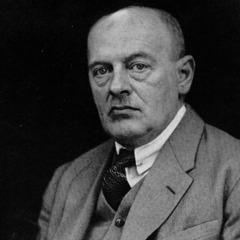
Max Scheler
Max Scheler

Max Scheler was a German philosopher born on August 22, 1874, and died on May 19, 1928. He is an important figure in the philosophy of phenomenology and existentialism, known for his contributions to ethics, aesthetics, and religious philosophy. more

You May Also Like

“Just like the forces of Good and Evil, on the levels so much distant from man, logic and reason clash with each other. In that merciless, multi-millennial and primal battle, none of them stepped away for an inch. In a craddle, like no man's land, we, the young human beings, find ourselves gazing upon the "toys that glitter". I wanted to believe.”

“Spinoza formulated the profoundly important principle that *all determination is negation*. To determine a thing is to cut it off from some sphere of being and so to limit it. To define is to set boundaries. To say that a thing is green limits it by cutting it from the sphere of pink, blue, or other-coloured things. To say that it is good cuts it off from the sphere of evil. This limitation is the same as negation. To *affirm* that a thing is within certain limits is to *deny* that it is outside those limits. To say that it is green is to say that it is not pink. Affirmation involves negation. Whatever is said of a thing denies something else of it. All determination is negation. This principle is fundamental for Hegel also, but with him it takes rather the converse form that *all negation is determination*. Formal logicians will remind us that we cannot simply convert Spinoza's proposition. But it is sufficient to point out in reply that not only does affirmation involve negation; negation likewise involves affirmation. To say that a thing belongs to one class is to affirm that it belongs to some other class,—though we may not know what that class is. Positive and negative are correlatives which mutually involve each other. To posit is to negate: this is Spinoza's principle. To negate is to posit: this is Hegel's. When, therefore, we meet Hegel talking about "the portentous power of the negative," we have to consider that for him negation is the very process of creation. For the *positive* nature of an object consists in its determinations. The nature of a stone is to be white, heavy, hard, etc. And since all determinations are negations, it follows that the positive nature of a thing consists in its negations. Negation, therefore, is of the very essence of positive being. And for the world to come into being what is above all necessary is the force of negation, "the portentous power of the negative." The genus only becomes the species by means of the differentia, and the differentia is precisely that which carves out a particular class from the general class by excluding, i.e., negating, the other species. And the species again only becomes the individual in the same way, by negating other individuals. These thoughts are no causal reflections of Hegel. They underlie his entire system. We must get to understand that these three ideas, determination, limitation, and negation, all involve each other." —from_The Philosophy of Hegel_”

“منطق العرب أن ليس لهم منطق .. إنما إنفعالات ونزوات شخصية تتحكم في الملايين عشرات السنين .. فالعرب لم يبتعدوا كثيرا عن التفسير الشخصي للأحداث .. وعن الإختراع الشخصي للأحداث أيضا ولذلك ف الدوافع شخصية و الكوارث قومية”

“The world of being is unchangeable, rigid, exact, delightful to the mathematician, the logician, the builder of metaphysical systems, and all who love perfection more than life. The world of existence is fleeting, vague, without sharp boundaries, without any clear plan or arrangement, but it contains all thoughts and feelings, all the data of sense, and all physical objects, everything that can do either good or harm, everything that makes any difference to the value of life and the world. According to our temperaments, we shall prefer the contemplation of the one or of the other.”

“If man really is fashioned, more than anything else, in the image of God, then clearly it follows that there is nothing on earth so near to God as a human being. The conclusion is inescapable, that to be in the presence of even the meanest, lowest, most repulsive specimen of humanity of the world is still to be closer to God than when looking up into a starry sky or at a beautiful sunset. Certainly that is why there is nothing in the new testament about beautiful sunsets.- Mike Mason -Author of "The Mystery of Marriage”

“If truth is not to be spoken, Sir, in a government, calling itself free, least it should be understood by the people, who are governed; and prevent their freely supplying the oil, that facilitates the movement of the cumbrous machine—If facts, which cannot be denied, be repressed; and reason, which cannot be controverted, be stifled; the time is not far distant, when such a country may say, adieu liberty!”