Quotessence
Home / Quotes / Quote by Michael Chabon

Quote by Michael Chabon

“You never would get through to the end of being a father, no matter where you stored your mind or how many steps in the series you followed. Not even if you died. Alive or dead a thousand miles distant, you were always going to be on the hook for work that was neither a procedure nor a series of steps but, rather, something that demanded your full, constant attention without necessarily calling you to do, perform, or say anything at all.”

Quote by Michael Chabon

Work

Telegraph Avenue

Telegraph Avenue is a richly detailed novel that delves into the lives of a group of friends living in the vibrant and diverse neighborhood of Telegraph Avenue in the San Francisco Bay Area. The story is centered around the struggles of a struggling record store owner and his relationship with his daughter, as well as the impact of gentrification on the community. The novel is known for its engaging characters, insightful commentary on the music industry, and its portrayal of the complexities of family and friendship. more

Author

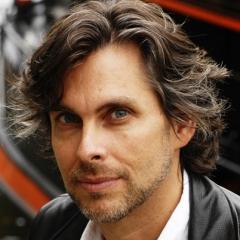
Michael Chabon
Michael Chabon

Michael Chabon is an American author known for his rich imagination and unique narrative style. His works span various literary genres, including novels, short story collections, and children's literature. Chabon's notable works include 'The Amazing Adventures of Kavalier & Clay', 'The Yiddish Policemen's Union', and 'The Mysteries of Pittsburgh', which have won him widespread acclaim and numerous literary awards. more

You May Also Like

“Our fear originates on a completely different level -that of the failure of the Grand Narrative of our society. This is the narrative of mechanistic science, in which man is reduced to a biological organism. A narrative that ignores the psychological, symbolic, and ethical dimensions of human beings and thereby has a devastating effect at the level of human relationships. Something in this narrative causes man to become isolated from his fellow man, and from nature; something in it causes man to stop resonating with the world around him; something in it turns the human being into an atomized subject.”

“The point, Squire, is that where they used to be confined to State institutions or to the mudrooms and attics of remote country houses they are now abroad everywhere. The government pays them to travel. To procreate, for that matter. I've seen entire families here that can best be explained as hallucinations. Hordes of drooling dolts lurching through the streets. Their inane gibbering. And of course no folly so deranged or pernicious as to escape their advocacy.”

“If "man" invented societies and cities, why are all societies and cities so repressive of "man"?... ...Sometimes people think there are some evil individual "men" somewhere who are exploiting them....These "men" are supposed to be enemies of "man". It gets confusing, but nobody seems to notice the confusion.... ... When societies and cultures and cities are seen not as inventions of "man" but as higher organisms than biological man, the phenomena of war and genocide and all the other forms of human exploitation become more intelligible. "Mankind" has never been interested in getting itself killed. But the superorganism, the Giant, who is a pattern of values superimposed on top of biological human bodies, doesn't mind losing a few bodies to protect his greater interests.... ...So here was this Giant, this nameless, faceless system reaching for him, ready to devour him and digest him. It would use his energy to grow stronger and stronger throughout his life while he grew older and weaker until, when he was no longer of much use, it would excrete him and find another younger person full of energy to take his place and do the same thing all over again.”