Quotessence
Home / Quotes / Quote by Bertolt Brecht

Quote by Bertolt Brecht

“Natürlich muss die Wahrheit im Kampf mit der Unwahrheit geschrieben werden und sie darf nicht etwas Allgemeines, Hohes, Vieldeutiges sein. Von dieser allgemeinen, hohen, vieldeutigen Art ist ja gerade die Unwahrheit. Wenn von einem gesagt wird, er hat die Wahrheit gesagt, so haben zunächst einige oder viele oder einer etwas anderes gesagt, eine Lüge oder etwas Allgemeines, aber er hat die Wahrheit gesagt, etwas Praktisches, Tatsächliches, Unleugbares, das, um was es sich handelte.”

Quote by Bertolt Brecht

Author
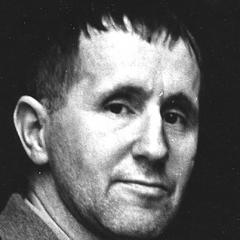
Bertolt Brecht
Bertolt Brecht

Bertolt Brecht, born on February 10, 1898, and died on August 14, 1956, was a German poet, playwright, director, and theorist. He is considered one of the most important theater reformers of the 20th century, whose innovative theatrical theories and practices have had a profound impact on world theater. more

You May Also Like

“There were moments when Nona felt oppressed by responsibilities and anxieties not of her age, apprehensions that she could not shake off and yet had not enough experience of life to know how to meet. One or two of her girl friends—in the brief intervals between whirls and thrills—had confessed to the same vague disquietude. It was as if, in the beaming determination of the middle-aged, one and all of them, to ignore sorrow and evil, "think them away" as superannuated bogies, survivals of some obsolete European superstition unworthy of enlightened Americans, to whom plumbing and dentistry had given higher standards, and bi-focal glasses a clearer view of the universe—as if the demons the elder generation ignored, baulked of their natural prey, had cast their hungry shadow over the young. After all, somebody in every family had to remember now and then that such things as wickedness, suffering and death had not yet been banished from the earth; and with all those bright-complexioned white-haired mothers mailed in massage and optimism, and behaving as if they had never heard of anything but the Good and the Beautiful, perhaps their children had to serve as vicarious sacrifices. There were hours when Nona Manford, bewildered little Iphigenia, uneasily argued in this way: others when youth and inexperience reasserted themselves, and the load slipped from her, and she wondered why she didn't always believe, like her elders, that one had only to be brisk, benevolent and fond to prevail against the powers of darkness.”

“Rather than trying to paper over our suffering with comforting beliefs, this approach is about actually exploring directly what seems to be in the way of freedom, peace and happiness, what seems scary, dreadful and unbearable. It's one thing to believe that the tiger chasing you is only a mirage, and it's another thing entirely to actually turn around and embrace the tiger and find out for sure.”