Quotessence
Home / Quotes / Quote by Charles Nodier

Quote by Charles Nodier

Work

Promenade from Dieppe to the Mountains of Scotland

Browse quotes and source details for this work. more

Author
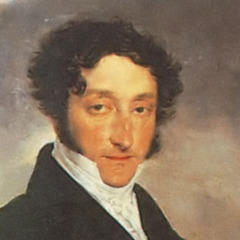
Charles Nodier
Charles Nodier

Charles Nodier, born on April 29, 1780, and died on January 27, 1844, was a prominent French author and literary critic. His works are known for their unique narrative style and their influence on Romantic literature. more

You May Also Like

“In a flash it came to me - might not people who were forced to spend their working hours between walls like to hear about what went on in a hill-top croft, of how it was possible to get an immense amount of fun and satisfaction out of lifting loads of mud into a cart, even though your boots were leaking and you knew there was not enough in the kitty to buy another pair? Would they like to know about the way light could stream down a blue hillside on a spring noon, how a lark could suddenly leap into a pale, washed skye after a night of storm and make the air ring with song, of how it was possible to get by every sort of difficulty as long as there was this knowledge that you were all in it together, this solidarity with rock and sun and bird? I believed they would.”

“The pipe-music filled the room with sound, until it seemed that the throbbing walls must burst asunder- or the very roof of the inn fly off, to release the pressure. The candle-light pranced around the room in a crazy reel of will-o’-the-wisps, distorted by the clouds of dust melting down from the ceiling like Hebridean mist. The Highlanders looked at each other in wild surmise, then started smashing tankards against the walls in time with the swirling strains of music, sending ale cascading up into the air, spattering the ceiling and soaking the revellers’ hair and plaids.”

“Spring in the hills would confront the greatest artist with too vast a panorama. I doubt if he could ever capture it. For Spring there is more than colour; it is music and scent. The burns literally hum down the hillside, the trees have rhythm in their shaking. The smell of Spring in the hills is a blending of peaty thickness, bracken-mould, flowers' spicyness, and clean, quick purge of the wind. Down in the hollows anemones, bereft of smell, gleam in pale patches.”

“Badenoch encapsulates the dichotomy of the sporting estate. Rich southern incomers provided much-needed income and jobs, a new economic lifeline in difficult times, while at the same time riding roughshod over the last remnants of the traditional farming economy to suit their own interests - another blow to a way of life that had survived and evolved over countless generations.”

“I would start at 6 a.m. on a six mile walk and a piece of dry oat cake was nearly always eaten before we reached the place selected to commence the day's shooting. The spying, stalking,and chasing would continue until dark. When there was a kill, or chase, we would not get back to the huts before ten or twelve at night, worn out, and so hungry as to be ready to eat anything. After attending to the dogs I had to walk home, a distance of two miles [sometimes not getting to bed till 2:00 a.m.], and next morning at 6 a.m. would be off again with a fresh gentleman.”

“Scott's description of the stag in The Lady of the Lake, is much more challenging than the image of Landseer's Monarch of the Glen. He refers to the 'antlered monarch of the waste', a far more appropriate creature of the upper reaches of Glen Artney where Canto I of The Lady of the Lake begins. The problem is that Scott and Landseer have become too closely associated; they have become a conjoined stereotype of the Highlands from which neither can escape. That is not such a problem for Landseer; indeed, without his association with Scott he would be much less known today. But it is a problem for Scott and the Highlands, because Landseer's image of The Monarch of the Glen has been visually conflated with Scott's literary work in the minds of so many.”