Quotessence
Home / Quotes / Quote by Paulo Coelho

Quote by Paulo Coelho

“They're tulip seeds, the symbol of our country. But, more than that, they represent a truth you must learn. These seeds will always be tulips, even if at the moment you cannot tell them apart from other flowers. They will never turn into roses or sunflowers, no matter how much they might desire to. And if they try to deny their own existence, they will live life bitter and die.”

Quote by Paulo Coelho

Book:The Spy

Work

The Spy

Browse quotes and source details for this work. more

Author

Paulo Coelho
Paulo Coelho

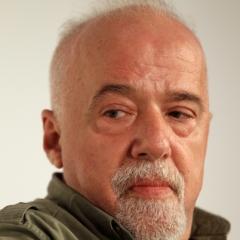
Paulo Coelho, born on August 24, 1947, is a renowned Brazilian author and lyricist. His works are characterized by profound philosophical thoughts and rich imagination, with his most famous novel being 'The Alchemist'. more

You May Also Like

“Yes, but perhaps he did have something to do with it.” (In such arguments Stenham often found himself unexpectedly extolling the bourgeois virtues.) “If he was good himself, and worked hard—” “Never!” cried Amar, his eyes blazing. “You’re a Nazarene, a Christian. That’s why you talk that way. If you were a Moslem and said such things, you’d be killed or struck blind here, this minute. Christians have good hearts, but they don’t know anything. They think they can change what has been written. They’re afraid to die because they don’t understand what death is for. And if you’re afraid to die, then you don’t know what life is for. How can you live?”

“I tended to find lines of poetry beautiful only when I encountered them quoted in prose, in the essays my professors had assigned in college, where the line breaks were replaced with slashes, so that what was communicated was less a particular poem than the echo of poetic possibility. Insofar as I was interested in the arts, I was interested in the disconnect between my experience of actual artworks and the claims made on their behalf; the closest I'd come to having a profound experience of art was probably the experience of this distance, a profound experience of the absence of profundity.”