Quotessence
Home / Quotes / Quote by Jamaica Kincaid

Quote by Jamaica Kincaid

“Do you know why people like me are shy about being capitalists? Well, its because we, for as long as we have known you, were capital, like bales of cotton and sacks of sugar, and you were commanding, cruel capitalists, and the memory of this so strong, the experience so recent, that we can't quite bring ourselves to embrace this idea that you think so much of. As for hat we were like before we met you, I no longer care. No periods of time over which my ancestors held sway, no documentation of complex civilisations, is any comfort to me. Even if I really came from people who were living like monkeys in trees, it was better to be that than what happened to me, what I became after I met you.”

Quote by Jamaica Kincaid

Work

A Small Place

This work delves into the historical and political consequences of colonial rule, offering a critical analysis of the social and psychological effects on the inhabitants of a small island. more

Author

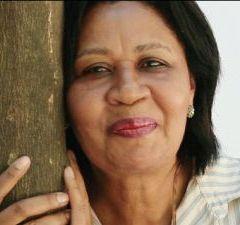
Jamaica Kincaid
Jamaica Kincaid

Jamaica Kincaid is a celebrated novelist known for her distinctive style and poignant storytelling. Born on May 25, 1949, she has made significant contributions to the literary world with her works that often explore themes of identity, colonialism, and the complexities of the human experience. more

You May Also Like

“First off, as has been well stated by many Indigenous Feminists before us, the idea of gender equality did not come from the suffragettes or other so-called "foremothers" of feminist theory. It should also be recognized that although we are still struggling for this thing called "gender equality," it is not actually a framed issue within the feminist realm, but a continuation of the larger tackling of colonialism. So this idea that women of colour all of a sudden realized "we are women," and magically joined the feminist fight actually re-colonizes people for who gender equality and other "feminist" notions is a remembered history and current reality since before Columbus. The mainstream feminist movement is supposed to have started in the early 1900s with women fighting for the right to vote. However, these white women deliberately excluded the struggles of working class women of color and participated in the policy of forced sterilization for Aboriginal women and women with disabilities. Furthermore, the idea that we all need to subscribe to the same theoretical understandings of history is marginalizing. We all have our own truths and histories to live.”

“We don't live in a world of perfect non-violent beauty. If we don't do the trials on animal specimens first, would you rather give yourself or a relative of yours up for experimentation! Some may say, why don't we avoid experimentation on live specimens all together - to them I say, modern medicine is not magic to work without errors - and hard and cruel as it may sound, a live animal specimen is expendable, but not a live human being. You may say, that's not fair - and indeed, it is in no way fair, but that's the reality. The only fairer alternative is to let humans suffer and die from diseases, like they used to, until about a few centuries ago.”

“Now imagine that an anthropologist specializing in primitive cultures beams herself down to the natives in Silicon Valley, whose way of life has not advanced a kilobyte beyond the Google age and whose tools have remained just as primitive as they were in the twenty-first century. She brings along with her a tray of taste samples called the Munsell Taste System. On it are representative samples of the whole taste space, 1,024 little fruit cubes that automatically reconstitute themselves on the tray the moment one picks them up. She asks the natives to try each of these and tell her the name of the taste in their language, and she is astonished at the abject poverty of their fructiferous vocabulary. She cannot comprehend why they are struggling to describe the taste samples, why their only abstract taste concepts are limited to the crudest oppositions such as “sweet” and “sour,” and why the only other descriptions they manage to come up with are “it’s a bit like an X,” where X is the name of a certain legacy fruit. She begins to suspect that their taste buds have not yet fully evolved. But when she tests the natives, she establishes that they are fully capable of telling the difference between any two cubes in her sample. There is obviously nothing wrong with their tongue, but why then is their langue so defective? Let’s try to help her. Suppose you are one of those natives and she has just given you a cube that tastes like nothing you’ve ever tried before. Still, it vaguely reminds you of something. For a while you struggle to remember, then it dawns on you that this taste is slightly similar to those wild strawberries you had in a Parisian restaurant once, only this taste seems ten times more pronounced and is blended with a few other things that you can’t identify. So finally you say, very hesitantly, that “it’s a bit like wild strawberries.” Since you look like a particularly intelligent and articulate native, the anthropologist cannot resist posing a meta-question: doesn’t it feel odd and limiting, she asks, not to have precise vocabulary to describe tastes in the region of wild strawberries? You tell her that the only things “in the region of wild strawberry” that you’ve ever tasted before were wild strawberries, and that it has never crossed your mind that the taste of wild strawberries should need any more general or abstract description than “the taste of wild strawberries.” She smiles with baffled incomprehension.”