Quotessence
Home / Quotes / Quote by J. R. R. Tolkien

Quote by J. R. R. Tolkien

“You speak evil of that which is fair beyond the reach of your thought, and only little wit can excuse you”

Quote by J. R. R. Tolkien

Author
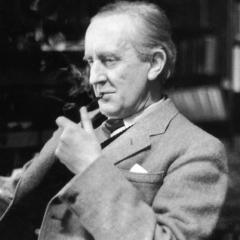
J. R. R. Tolkien
J. R. R. Tolkien

J.R.R. Tolkien was an English writer, best known for his fantasy literature, most notably The Lord of the Rings trilogy and The Hobbit. His works have had a profound impact on modern fantasy literature. more

You May Also Like

“It's like in the great stories, Mr. Frodo. The ones that really mattered, full of darkness and danger they were, and sometimes you didn't want to know the end, because how could the end be happy? How could the world go back to the way it was, before so much bad had happened? But in the end, it's only a passing thing, this shadow. Even darkness must pass. A new day will come, and when the sun shines, it will shine all the clearer. Those were the stories that stayed with you, that meant something, even if you were too small to understand why. But I think I do understand. I know now. Folk in those stories had lots of chances to turn back, only they didn't. They kept going, because they were holding onto something...There's some good in this world. And it's worth fighting for.”

“Strange are the ways of Men, Legolas! Here they have one of the marvels of the Northern World, and what do they say of it? Caves, they say! Caves! Holes to fly to in time of war, to store fodder in! My good Legolas, do you know that the caverns of Helm’s Deep are vast and beautiful? There would be an endless pilgrimage of Dwarves, merely to gaze at them, if such things were known to be. Aye indeed, they would pay pure gold for a brief glance!’ ‘And I would give gold to be excused,’ said Legolas; ‘and double to be let out, if I strayed in!’ ‘You have not seen, so I forgive your jest,’ said Gimli. ‘But you speak like a fool. Do you think those halls are fair, where your King dwells under the hill in Mirkwood, and Dwarves helped in their making long ago? They are but hovels compared with the caverns I have seen here: immeasurable halls, filled with an everlasting music of water that tinkles into pools, as fair as Kheled-zâram in the starlight. ‘And, Legolas, when the torches are kindled and men walk on the sandy floors under the echoing domes, ah! then, Legolas, gems and crystals and veins of precious ore glint in the polished walls; and the light glows through folded marbles, shell-like, translucent as the living hands of Queen Galadriel. There are columns of white and saffron and dawn-rose, Legolas, fluted and twisted into dreamlike forms; they spring up from many-coloured floors to meet the glistening pendants of the roof: wings, ropes, curtains fine as frozen clouds; spears, banners, pinnacles of suspended palaces! Still lakes mirror them: a glimmering world looks up from dark pools covered with clear glass; cities. such as the mind of Durin could scarce have imagined in his sleep, stretch on through avenues and pillared courts, on into the dark recesses where no light can come. And plink! a silver drop falls, and the round wrinkles in the glass make all the towers bend and waver like weeds and corals in a grotto of the sea. Then evening comes: they fade and twinkle out; the torches pass on into another chamber and another dream. There is chamber after chamber, Legolas; hall opening out of hall, dome after dome, stair beyond stair; and still the winding paths lead on into the mountains’ heart. Caves! The Caverns of Helm’s Deep! Happy was the chance that drove me there! It makes me weep to leave them.’ ‘Then I will wish you this fortune for your comfort, Gimli,’ said the Elf, ‘that you may come safe from war and return to see them again. But do not tell all your kindred! There seems little left for them to do, from your account. Maybe the men of this land are wise to say little: one family of busy dwarves with hammer and chisel might mar more than they made.’ ‘No, you do not understand,’ said Gimli. ‘No dwarf could be unmoved by such loveliness. None of Durin’s race would mine those caves for stones or ore, not if diamonds and gold could be got there. Do you cut down groves of blossoming trees in the spring-time for firewood? We would tend these glades of flowering stone, not quarry them. With cautious skill, tap by tap – a small chip of rock and no more, perhaps, in a whole anxious day – so we could work, and as the years went by, we should open up new ways, and display far chambers that are still dark, glimpsed only as a void beyond fissures in the rock. And lights, Legolas! We should make lights, such lamps as once shone in Khazaddûm; and when we wished we would drive away the night that has lain there since the hills were made; and when we desired rest, we would let the night return.”

“The challenges that the sphere of social work faces today is appropriate funding, channelization of funds for suitable causes, dilution of the object of funding, harnessing appropriate technology to aid in social work, total eradication of social evils –for example –poverty, dilution of social ethics, deviation from devised goals, scarcity of resources etc”

“But my attention’s elsewhere, drawn to that warm wonderful pull, the familiar loving essence that only belongs to one person—only belongs to him— Watching as Damen cuts through the water, board tucked under his arm, body so sculpted, so bronzed, Rembrandt would weep. Water sluicing behind him like a hot knife through butter, cleanly, fluidly, as though parting the sea. My lips part, desperate to speak, to call out his name and bring him back to me. But just as I’m about to, my eyes meet his and I see what he sees: me—hair tangled and wet—clothes twisted and clinging—frolicking in the ocean on a hot sunny day with Jude’s tanned strong arms still wrapped around me. I release myself from Jude’s grip, but it’s too late. Damen’s already seen me. Already moved on. Leaving me hollow, breathless, as I watch him retreat. No tulips, no telepathic message, just a sad, empty void left behind in his place.”