“Of the things I had not known when I started out, I think the most important was the degree to which the legacy of the McCarthy period still lived. It had been almost seven years since Joe McCarthy had been censured when John Kennedy took office, and most people believed that his hold on Washington was over. ... among the top Democrats, against whom the issue of being soft on Communism might be used, and among the Republicans, who might well use the charge, it was still live ammunition. ... McCarthyism still lingered ... The real McCarthyism went deeper in the American grain than most people wanted to admit ... The Republicans’ long, arid period out of office [twenty years, ended by the Eisenhower administration], accentuated by Truman’s 1948 defeat of Dewey, had permitted the out-party in its desperation, to accuse the leaders of the governing party of treason. The Democrats, in the wake of the relentless sustained attacks on Truman and Acheson over their policies in Asia, came to believe that they had lost the White House when they lost China. Long after McCarthy himself was gone, the fear of being accused of being soft on Communism lingered among the Democratic leaders. The Republicans had, of course, offered no alternative policy on China (the last thing they had wanted to do was suggest sending American boys to fight for China) and indeed there was no policy to offer, for China was never ours, events there were well outside our control, and our feudal proxies had been swept away by the forces of history. But in the political darkness of the time it had been easy to blame the Democrats for the ebb and flow of history. The fear generated in those days lasted a long time, and Vietnam was to be something of an instant replay after China. The memory of the fall of China and what it did to the Democrats, was, I think, more bitter for Lyndon Johnson than it was for John Kennedy. Johnson, taking over after Kennedy was murdered and after the Kennedy patched-up advisory commitment had failed, vowed that he was not going to be the President of the United States who lost the Great Society because he lost Saigon. In the end it would take the tragedy of the Vietnam War and the election of Richard Nixon (the only political figure who could probably go to China without being Red-baited by Richard Nixon) to exorcise those demons, and to open the door to China.”
Quote by David Halberstam
Work
The Best and the Brightest
This book delves into the lives and decisions of key figures who were instrumental in the formulation and execution of American foreign policy during the Vietnam era. It analyzes the motivations, strategies, and mistakes made by these leaders, providing a nuanced understanding of the complex issues surrounding the war. more
Author
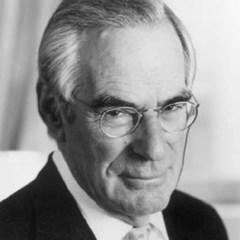
David Halberstam
David Halberstam was an American journalist and author renowned for his comprehensive reporting and insightful analysis of American society and politics. Born on April 10, 1934, in New York City, he passed away on April 23, 2007. more
You May Also Like
Source: Blackshirts and Reds: Rational Fascism and the Overthrow of Communism
Source: As Always, Julia: The Letters of Julia Child and Avis DeVoto: Food, Friendship, and the Making of a Masterpiece
Source: The View From The Ground
Source: Fixing Mr. Billionaire
Source: Words That Must Somehow Be Said: Selected Essays, 1927-1984
Source: The Red Decade: The Stalinist Penetration of America
Source: Pain, Parties, Work: Sylvia Plath in New York, Summer 1953