“Another big group of dolphins had just surfaced alongside our moving vessel—leaping and splashing and calling mysteriously back and forth in their squeally, whistly way, with many babies swift alongside their mothers. And this time, confined to just the surface of such deep and lovely lives, I was becoming unsatisfied. I wanted to know what they were experiencing, and why to us they feel so compelling, and so—close. This time I allowed myself to ask them the question that was forbidden fruit: Who are you? Science usually steers firmly from questions about the inner lives of animals. Surely they have inner lives of some sort. But like a child who is admonished that what they really want to ask is impolite, a young scientist is taught that the animal mind—if there is such—is unknowable. Permissible questions are “it” questions: where it lives; what it eats; what it does when danger threatens; how it breeds. But always forbidden—always forbidden—is the one question that might open the door: “Who?” — Carl Safina”
Quote by Carl Safina
Work
Beyond Words: What Animals Think and Feel
Browse quotes and source details for this work. more
Author
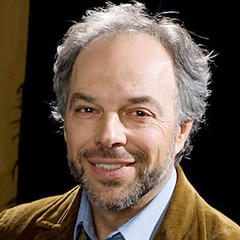
Carl Safina
Carl Safina, born in 1955, is a renowned author, marine biologist, and environmental advocate. His work primarily focuses on marine ecology and the relationship between humans and nature, using accessible language to reveal the importance of marine biodiversity and the impact of human activities on marine environments. more
You May Also Like
Source: Man's Knowledge of Reality: An Introduction to Thomistic Epistemology
“She wasn't being methodological. She was being autobiographical.”
“Love is not even an emotion so don't get emotional over it.”
Source: Morning and Evening, Based on the English Standard Version
“Knowing beauty is not what can be described but felt, upon looking at something beautiful.”