Quotessence
Home / Quotes / Quote by Rosemary Sutcliff

Quote by Rosemary Sutcliff

“Before he left Rome, Marcus had been in a fair way to becoming a charioteer, in Cradoc's sense of the word, and now desire woke in him, not to possess this team, for he was not one of those who much be able to say "Mine" before they can truly enjoy a thing, but to have them out and harnessed; to feel the vibrating chariot floor under him, and the spread reins quick with life in his hands, and these lovely, fiery little creatures in the traces, his will and theirs at one.”

Quote by Rosemary Sutcliff

Work

The Eagle of the Ninth

The story follows a young Roman soldier's quest to recover a lost eagle standard, which is a symbol of his father's unit. The novel combines elements of historical fiction with a coming-of-age narrative, taking readers on a perilous journey through the wilds of Scotland. more

Author
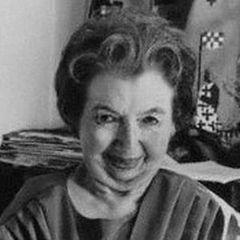
Rosemary Sutcliff
Rosemary Sutcliff

Rosemary Sutcliff was a British historical novelist renowned for her historical fiction, particularly her works set during the Roman period and the Dark Ages. Born on December 14, 1920, and passing away on July 23, 1992, Sutcliff's meticulous research and evocative storytelling have left a lasting impact on the genre. more

You May Also Like

“I would by all means have men beware, lest Aesop's pretty fable of the fly that sate on the pole of a chariot at the Olympic races and said, 'What a dust do I raise,' be verified in them. For so it is that some small observation, and that disturbed sometimes by the instrument, sometimes by the eye, sometimes by the calculation, and which may be owing to some real change in the sky, raises new skies and new spheres and circles.”

“Scripture is a record of the same story, told again and again, in different ways but always with the same theme, for more than three thousand years. God loves man. Man betrays God. Then God calls man back to his friendship. Sometimes that call involves some very painful suffering, and for good reason. God respects our freedom. But he will not interfere with our choices or their consequences, no matter how unpleasant. As a result, the struggle in the human heart between good and evil-- a struggle that seems burned into our chromosomes-- projects itself onto the world, to ennoble or deform it. The beauty and the barbarism we inflict on one another leave their mark on creation.”

“Nick,' he corrected quietly. 'As to your emotions, they show in your face, in those amazing eyes. One day soon those eyes will change colour and glow for me.' 'They already have done,' Joanna snapped, rage surfacing. 'I never liked you, Mr Martella, and now I can only think I hate you. If I should ever know that you're coming here again I'll make quite sure I'm a long way off!' He took one menacing step towards her and Joanna backed away, her expression of loathing making his face harden frighteningly. 'I will not touch you,' he grated angrily. 'I will merely tell you this: J leave for America tomorrow. I shall be there for two months. When I return I intend to come for you.' The thought of people in the house left Joanna's head entirely. Her hands clenched at her sides and her considerable temper surfaced over grief, fear and utter bewilderment. 'If you were the last man in the universe I wouldn't consent to be near you!' she shouted. 'You've taken away everything I've ever wanted. You've even sneaked up and taken my father. Now I can never go to Santa Marta again!' 'I know you love the island,' he said with surprising quiet. 'Your father told me. We will live there and you will see your father whenever you care to walk down the beach to his house.' 'I'll see him when he comes over to England,' Joanna corrected bitterly. 'One thing is for sure, though: after today I'll never see you again! Forget the mad idea about me, Mr Martella, because I'd rather die!' 'You will not die, Joanna,' he said silkily, 'unless it is the small death that lovers die in each other's arms. And I intend to be your lover. In two months I will be back.”

“Driving home, I thought of Janice, wondering why I wasn’t upset or hurt by (William) Styron’s wine-soaked moves. Did I give his flirtations a pass because of the alcohol? Was it because he was a famous and a highly praised writer whom I'd wanted to meet? Or did I need to protect him since he was somebody, and I was nobody? I only knew that I didn’t feel abused, like I knew Janice had been…. Styron was famous. But so was Coach, at least in Soso.”

“Talking with Merritt was like slipping into one of those silk-lined borrowed coats from the Challons. Comfortable, luxurious. She was whip-smart, understanding the details, the unsaid words. She had a way of wrapping people in empathy that extended to everyone from the duke down to the young assistant groundskeeper. It was the kind of charm that made people feel wittier, more attractive, more interesting, in her reflected glow. Keir was doing his level best to resist her lure. But he was so drawn to her, so damn besotted. He adored her fancy words... "prevarication"... "resplendent"... her easy smiles... her perfumed wrists and throat. She was like a beautiful gift that begged to be unwrapped. Just being near her made the blood sing in his veins.”

“I see the pain of miserly love in young people,' I say. 'You don't have that kind of melancholy on your face. But I'm careful not to step on your feet when I speak with you. It's not like dancing. It's like a stone walkway with a little grass between the cracks. It's strong but I will try to tread carefully and not ruin it. In Muslim homes you leave your shoes outside. This is how I behave with you.”