Quotessence
Home / Quotes / Quote by Aldous Huxley

Quote by Aldous Huxley

“El éxito se le subió a Bernard a la cabeza y le reconcilió casi completamente (como lo hubiese conseguido cualquier otro intoxicante) con un mundo que, hasta entonces, había juzgado poco satisfactorio. Desde el momento en que le reconocía a él como un ser importante, el orden de cosas era bueno.”

Quote by Aldous Huxley

Work

Brave New World

Written by Aldous Huxley, this seminal work delves into themes of societal control, consumerism, and the loss of individuality through a vivid portrayal of a world where people are conditioned from birth to conform to their predetermined roles. more

Author

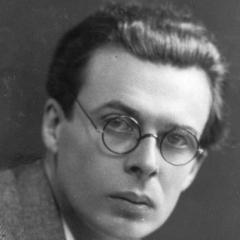
Aldous Huxley
Aldous Huxley

Aldous Huxley was an English writer and philosopher, renowned for his dystopian novel 'Brave New World'. Born on July 26, 1894, in Godalming, Surrey, England, he was the younger brother of the poet and critic Leonard Huxley. Huxley's works frequently delved into the interplay of science, politics, and philosophy, and he was a prominent figure in the literary movement known as the 'Lost Generation'. He passed away on November 22, 1963. more

You May Also Like

“She hadn’t always been obsessed with babies. There was a time she believed she would change the world, lead a movement, follow Dolores Huerta and Sylvia Mendez, Ellen Ochoa and Sonia Sotomayor. Where her bisabuela had picked pecans and oranges in the orchards, climbing the tallest trees with her small girlbody, dropping the fruit to the baskets below where her tías and tíos and primos stooped to pick those that had fallen on the ground, where her abuela had sewn in the garment district in downtown Los Angeles with her bisabuela, both women taking the bus each morning and evening, making the beautiful dresses to be sold in Beverly Hills and maybe worn by a movie star, and where her mother had cared for the ill, had gone to their crumbling homes, those diabetic elderly dying in the heat in the Valley—Bianca would grow and tend to the broken world, would find where it ached and heal it, would locate its source of ugliness and make it beautiful. Only, since she’d met Gabe and become La Llorona, she’d been growing the ugliness inside her. She could sense it warping the roots from within. The cactus flower had dropped from her when she should have been having a quinceañera, blooming across the dance floor in a bright, sequined dress, not spending the night at her boyfriend’s nana’s across town so that her mama wouldn’t know what she’d done, not taking a Tylenol for the cramping and eating the caldo de rez they’d made for her. They’d taken such good care of her. Had they done it for her? Or for their son’s chance at a football scholarship? She’d never know. What she did know: She was blessed with a safe procedure. She was blessed with women to check her for bleeding. She was blessed with choice. Only, she hadn’t chosen for herself. She hadn’t. Awareness must come. And it did. Too late. If she’d chosen for herself, she would have chosen the cactus spines. She would’ve chosen the one night a year the night-blooming cereus uncoils its moon-white skirt, opens its opalescent throat, and allows the bats who’ve flown hundreds of miles with their young clutching to their fur as they swim through the air, half-starved from waiting, to drink their fill and feed their next generation of creatures who can see through the dark. She’d have been a Queen of the Night and taught her daughter to give her body to no Gabe. She knew that, deep inside. Where Anzaldúa and Castillo dwelled, where she fed on the nectar of their toughest blossoms. These truths would moonstone in her palm and she would grasp her hand shut, hold it tight to her heart, and try to carry it with her toward the front door, out onto the walkway, into the world. Until Gabe would bend her over. And call her gordita or cochina. Chubby girl. Dirty girl. She’d open her palm, and the stone had turned to dust. She swept it away on her jeans. A daughter doesn’t solve anything; she needed her mama to tell her this. But she makes the world a lot less lonely. A lot less ugly.”

“What is important about immigration is how immigrants arrived and what the individual immigrants do with their lives after arriving. Do they open a restaurant or other business, do they provide for their family, do they integrate into the larger community - in essence, do they become proud Americans? Or do they try their hardest to stay "economic migrants" or "hyphenated-Americans"? Or, at worst, do they attempt to convert America into the countries from which they escaped?”