Quotessence
Home / Quotes / Quote by Maajid Nawaz

Quote by Maajid Nawaz

Work

Islam and the Future of Tolerance: A Dialogue

Browse quotes and source details for this work. more

Author
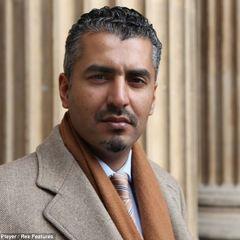
Maajid Nawaz
Maajid Nawaz

Maajid Nawaz is a British-Pakistani political activist and writer known for his advocacy of secularism and democracy within the Muslim community. Born in 1978, he has been actively involved in politics and has written extensively on issues related to Islam and the Muslim community. Nawaz's work focuses on promoting secularism and democracy, and he has been a vocal advocate for reform within Islam. more

You May Also Like

“The similarities between groups like Al Qaeda or the Islamic State and USSR are too numerous and fundamental to be ignored. Both groups are driven by a totalitarian vision. The followers of Karl Marx envisioned a world transformed into a workers’ paradise in which all other classes had been destroyed and only one party, the Communist Party, was in control. Today’s jihadists also have a universal vision. They look forward to a global caliphate in which all have submitted to the will of Allah and live as Muslims, the infidels and apostates having been slain. Both visions are exclusive, absolutist, and totalitarian. They are predicated on a ‘them or us’ vision of how the world must be. There is no possibility for peaceful coexistence with the ‘other'.”

“I’d argue, in fact, that the rise of the so-called Islamic State under Abu Bakr al-Baghdadi does somewhat vindicate Osama bin Laden’s strategy and his belief that making the West intervention-weary through war would lead to a power vacuum in the Middle East and that the West would abandon its support for Arab despots, which would lead to the crumbling of despotic regimes. From the ashes of that would rise an Islamic State. Bin Laden said this eleven years ago, and it’s uncanny how the Arab uprisings have turned out.”

“Infelizmente, este espectáculo também só existe porque existem espectadores. Conta a lenda urbana que a guilhotina caiu em desuso na França do Terror, porque era uma forma demasiado rápida e demasiado limpa de tirar vidas. As massas ávidas de sofrimento, morte lenta e dor desinteressavam-se. Mas, numa era de «reality shows», onde multidões passam horas a espiolhar as casas de banho de cobaias humanas amestradas, as execuções do EI fecham o círculo das prosas bárbaras e fazem sentido.”

“To this day, people in Washington can’t even agree about what to call this group. Some refer to it as ISIS—the Islamic State of Iraq and Syria. Others, such as President Obama, refer to it as ISIL—the Islamic State of Iraq and the Levant. Yet in reality neither name is correct. In war, names matter. An intelligence preparation of the battlefield does not describe enemies capriciously. The way we talk about our foes is a function of the raw intelligence we put into the system, and the names we give them are a reflection of what they call themselves. We called the Third Reich the Third Reich because that was what the Nazis called themselves. The same was true with the Soviet Union and the Warsaw Pact. If we wish to be accurate, we should refer to our current enemy as the “Islamic State.” That is what they have called themselves since Abu Bakr al Baghdadi declared the caliphate reborn in the summer of 2014. And indeed such major publications as the Financial Times and the Economist refer to the jihadi group as IS.”

“Centuries have passed since the wars of religion ceased in Europe, and since men stopped dying in large numbers because of arcane theological disputes. Hence, perhaps, the incredulity and denial with which Westerners have greeted news of the theology and practices of the Islamic State. Many refuse to believe that this group is as devout as it claims to be, or as backward-looking or apocalyptic as its actions and statements suggest. "Their skepticism is comprehensible. In the past, Westerners who accused Muslims of blindly following ancient scriptures came to deserved grief from academics—notably the late Edward Said—who pointed out that calling Muslims 'ancient' was usually just another way to denigrate them. Look instead, these scholars urged, to the conditions in which these ideologies arose—the bad governance, the shifting social mores, the humiliation of living in lands valued only for their oil. "Without acknowledgment of these factors, no explanation of the rise of the Islamic State could be complete. But focusing on them to the exclusion of ideology reflects another kind of Western bias: that if religious ideology doesn’t matter much in Washington or Berlin, surely it must be equally irrelevant in Raqqa or Mosul. When a masked executioner says Allahu akbar while beheading an apostate, sometimes he’s doing so for religious reasons.”

“It would be facile, even exculpatory, to call the problem of the Islamic State 'a problem with Islam.' The religion allows many interpretations, and Islamic State supporters are morally on the hook for the one they choose. And yet simply denouncing the Islamic State as un-Islamic can be counterproductive, especially if those who hear the message have read the holy texts and seen the endorsement of many of the caliphate’s practices written plainly within them.”