Quotessence
Home / Quotes / Quote by Kieron Gillen

Quote by Kieron Gillen

Work

Star Wars, Vol. 7: The Ashes of Jedha

Browse quotes and source details for this work. more

Author
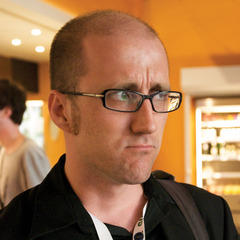
Kieron Gillen
Kieron Gillen

Kieron Gillen is a highly respected comic book writer, recognized for his work on titles like 'The Wicked + The Divine', 'Journey into Mystery', and 'X-Men'. Born in 1975, Gillen has made a substantial impact on the comic book industry with his distinctive storytelling and compelling characters. more

You May Also Like

“Seen from a distance, the hill of Montmartre hadn't changed much since Roman times. For centuries, old vines had grown there tended by local nuns in the Middle Ages, though the vineyards nowadays had either been built upon or lapsed into waste ground. But one pleasant change had occurred, a number of wooden windmills had gathered near the summit, their lumbering sails turning in the wind, giving the hill a picturesque appearance.”

“Then, at last, Madeleine’s luck turned. She came across Montmartre. With its windmills, its clear air and the old-fashioned, village feel of its higgledy-piggledy houses perched on a slope, few places recalled the Limousin countryside so vividly as Montmartre. It was up to 129 metres above sea level at the highest point. Why, with its narrow, winding streets and alleys, and its cottages clinging to the hillside, a person could have believed themselves in Le Mas Barbu. The bustling Rue Lepic and the Place des Abbesses readily called to mind Bessines’ town square on a busy market day. And all around, steep, grassy banks rose up protectively, hillside homes bloomed with flowers, old men installed in wrought iron chairs sat outside doorways and set the world to rights, children played in the street and women chatted and gossiped as they made their way to fill baskets with provisions. At last, Madeleine had found somewhere familiar, reassuring, comforting. Montmartre felt like home.”

“Increasingly, a new generation of artists were finding the creative projects which so excited them systematically rebuffed by the official art bodies. It was exasperating. Did the jury of the Salon, that ‘great event’ of the artistic world, never tire of the tedious repertoire of historical events and myths that had formed the mainstay of Salon paintings for so long? Did they not feel ridiculed being sold the blatant lie of highly finished paint surfaces, of bodies without a blemish, of landscapes stripped of all signs of modernity? Was contemporary life, the sweat and odour of real men and women, not deserving of a place on the Salon walls? Young artists huddled around tables in Montmartre’s cafés, sharing their deepest frustrations, breathing life into their most keenly held ideas. Just a few streets away from the Cimetière de Montmartre, Édouard Manet, the enfant terrible of the contemporary art world, could be found at his regular table in the Café Guerbois surrounded by reverent confrères, who would in time become famous in their own right. When Manet spoke, his blue eyes sparkled, his body leant forwards persuasively, and an artistic revolution felt achievable. The atmosphere was electric, the conversation passionate – often heated, but always exciting. The discussions ‘kept our wits sharpened,’ Claude Monet later recalled, ‘they encouraged us with stores of enthusiasm that for weeks and weeks kept us up.’ And though the war caused many of the artists to leave the capital, it proved merely a temporary migration. At the time Madeleine and her daughters arrived in Montmartre, the artists had firmly marked their patch.”