Quotessence
Home / Quotes / Quote by Agatha Christie

Quote by Agatha Christie

“Mrs. Baker's social manner was almost robotlike in its perfection. All her comments and remarks were natural, normal, everyday currency, but one had a suspicion that the whole thing was like an actor playing a part for perhaps the seven hundredth time. It was an automatic performance, completely divorced from what Mrs. Baker might really have been thinking or feeling.”

Quote by Agatha Christie

Work

Destination unknown

The narrative follows individuals who set out for a destination that is not revealed to them, focusing on their experiences and interactions along the way. The book delves into the psychological and emotional aspects of traveling into the unknown, examining how people cope with ambiguity and the search for meaning in unfamiliar circumstances. The plot emphasizes the journey itself rather than the final destination, highlighting the transformative power of uncertainty and the human desire to explore beyond familiar boundaries. more

Author

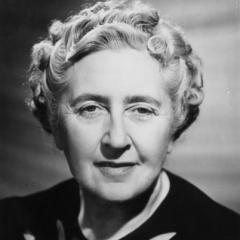
Agatha Christie
Agatha Christie

Agatha Christie, a renowned British detective novel writer, is known as the Queen of Detective Fiction. She was born on September 15, 1890, and passed away on January 12, 1976. Christie's works are characterized by intricate plots, unique reasoning, and vivid characters, and have had a profound impact on detective fiction worldwide. more

You May Also Like

“Realize yourself. Realize your abilities. Be sincere to nobody else, but yourself. Keep walking on the path of bravery. Keep walking on the path of your passion. Keep walking, and do not stop until you reach your goal.”

“A newcomer to a city should first look for a suitable room for resting at night. After securing the room and keeping the luggage there, he or she may go out for sightseeing. Otherwise it'll be a lot of suffering to find a place to rest in the darkness of the night. Similarly, upon securing the eternal resting place in Self, one can freely roam around doing his or her daily works.”

“I will give you this, my love, and I will not bargain or barter any longer. I will love you, as sure as He has loved me. I will discover what I can discover and though you remain a mystery, save God's own knowledge, what I disclose of you I will keep in the warmest chamber of my heart, the very chamber where God has stowed Himself in me. And I will do this to my death, and to death it may bring me. I will love you like God, because of God, mighted by the power of God. I will stop expecting your love, demanding you love, trading for your love, gaming for your love. I will simply love. I am giving myself to you, and tomorrow I will do it again. I suppose the clock itself will wear thin its time before I am ended at this altar of dying and dying again. God risked Himself on me. I will risk myself on you. And together, we will learn to love, and perhaps then, and only then, understand this gravity that drew Him, unto us.”

“What I think I am saying is that phenomenal consciousness - the raw feel of experience - is invisible to conventional scientific scrutiny and will forever remain so. It is, by definition, subjective - where as science, by definition, adopts an objective stance. You can't be in two places at once. You either experience consciousness "from the inside" ([...]) or you view it "from the outside" ([...]). Science can study the neural activity, the bodily states, the environmental conditions, and the outward behaviours - including verbal behaviours that stand for different states of awareness ([...]), but the quality - the feel - of our experiences remains forever private and therefore out of bounds of scientific analysis. I can't see a way round this. Privateness is a fundamental constituent of consciousness.”

“You know who you are and what you are capable of, because of your own personal history and the experiences you gained throughout that history.”

“Pay attention and listen. Your inner self has to say something to you. Listen to that eternal entity within, and you shall discover the way through which you’ll reach your goal.”

“But if time exists only in my head, and I'm the last human being, it will end with my death. The thought cheers me. I may be in a position to murder time. The big net will tear and fall, with its sad contents, into oblivion. I'm owed some gratitude, but no one after my death will know I murdered time. Really these thoughts are quite meaningless. Things happen, and, like millions of people before me, I look for meaning in them, because my vanity will not allow me to admit that the whole meaning of an event lies in the event itself.”