“It seemed that hell could appear day or night, at any time, at any place, simply in response to one's thoughts or wishes. It seemed that we could summon it at our pleasure and that instantly it would appear.”
Quote by Yukio Mishima
Work
The Temple of the Golden Pavilion
The Temple of the Golden Pavilion is a novel by Japanese author Yukio Mishima, first published in 1956. It is based on the real-life burning of the Kinkaku-ji temple in Kyoto in 1950. The story follows Mizoguchi, a young man with a stutter and a deep admiration for the temple's beauty, who becomes a novice at the temple. His growing obsession with the temple's perfection and his internal conflicts with beauty, ugliness, and impermanence culminate in a dramatic and tragic decision. The novel explores themes of aestheticism, obsession, and the destructive nature of idealized beauty. more
Author
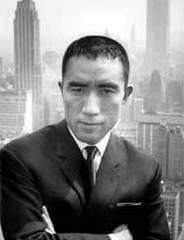
Yukio Mishima
Yukio Mishima was a Japanese author and playwright, a prominent figure in post-war Japanese literature. His works, characterized by a fusion of traditional Japanese aesthetics and modernist techniques, often explored themes of tradition, ritual, and the samurai code. more
You May Also Like
Source: I Have No Mouth & I Must Scream
Source: Saint Joan
Source: The Green Mile
Source: Sandman Slim
“Who made the world I cannot tell; 'Tis made, and here I am in hell.”
Source: More Poems
Source: Hitch 22: A Memoir
Source: The Bedwetter: Stories of Courage, Redemption, and Pee
Source: Becoming Vajrasattva