“I have it in my mind that classification is a necessary condition of the working of the mental implement but that it is a departure from the objective truth of things, that classification is very serviceable for the practical purposes of life but a very doubtful preliminary to those fine penetrations the philosophical purpose, in its more arrogant moods, demands. All the peculiarities of my way of thinking derive from that. I submit to you that syllogism is based on classification, that all hard logical reasoning tends to imply and is apt to imply a confidence in the objective reality of classification. Consequently in denying that I deny the absolute validity of logic. Classification and number, which in truth ignore the fine differences of objective realities, have in the past of human thought been imposed upon things. [...] The forceps of our minds are clumsy forceps, and crush the truth a little in taking hold of it. It was about this difficulty that the mind of Plato played a little inconclusively all his life. For the most part he tended to regard the idea as the something behind reality, whereas it seems to me that the idea is the more proximate and less perfect thing, the thing by which the mind, by ignoring individual differences, attempts to comprehend an otherwise unmanageable number of unique realities.”
Quote by H. G. Wells
Author
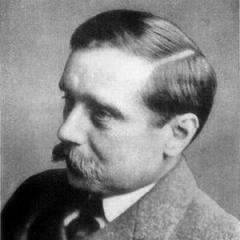
H. G. Wells
H.G. Wells was a prominent English writer known for his science fiction, history, and social commentary. His most famous works include 'The Time Machine,' 'The War of the Worlds,' and 'The Invisible Man.' Born on September 21, 1866, in Bromley, Kent, England, Wells passed away on August 13, 1946. more
You May Also Like
Source: Die Entführung aus der Klosterschule
“The light obtained by setting straw men on fire is not what we mean by illumination.”
Source: Open Papers - Selected Essays
Source: Johann Sebastian Bach: The Learned Musician