Quotessence
Home / Quotes / Quote by Donald Hall

Quote by Donald Hall

“It is sensible of me to be aware that I will die one of these days. I will not pass away. Every day millions of people pass away—in obituaries, death notices, cards of consolation, e-mails to the corpse’s friends—but people don’t die. Sometimes they rest in peace, quit this world, go the way of all flesh, depart, give up the ghost, breathe a last breath, join their dear ones in heaven, meet their Maker, ascend to a better place, succumb surrounded by family, return to the Lord, go home, cross over, or leave this world. Whatever the fatuous phrase, death usually happens peacefully (asleep) or after a courageous struggle (cancer). Sometimes women lose their husbands. (Where the hell did I put him?) Some expressions are less common in print: push up the daisies, kick the bucket, croak, buy the farm, cash out. All euphemisms conceal how we gasp and choke turning blue.”

Quote by Donald Hall

Work

Essays After Eighty

Browse quotes and source details for this work. more

Author
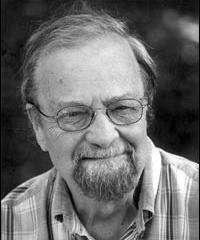
Donald Hall
Donald Hall

Donald Hall is a renowned American poet, born on September 20, 1928. His poetry is known for its simplicity, depth, and emotional richness, which has won him a wide audience. more

You May Also Like

“MOTHER – By Ted Kooser Mid April already, and the wild plums bloom at the roadside, a lacy white against the exuberant, jubilant green of new grass and the dusty, fading black of burned-out ditches. No leaves, not yet, only the delicate, star-petaled blossoms, sweet with their timeless perfume. You have been gone a month today and have missed three rains and one nightlong watch for tornadoes. I sat in the cellar from six to eight while fat spring clouds went somersaulting, rumbling east. Then it poured, a storm that walked on legs of lightning, dragging its shaggy belly over the fields. The meadowlarks are back, and the finches are turning from green to gold. Those same two geese have come to the pond again this year, honking in over the trees and splashing down. They never nest, but stay a week or two then leave. The peonies are up, the red sprouts, burning in circles like birthday candles, for this is the month of my birth, as you know, the best month to be born in, thanks to you, everything ready to burst with living. There will be no more new flannel nightshirts sewn on your old black Singer, no birthday card addressed in a shaky but businesslike hand. You asked me if I would be sad when it happened and I am sad. But the iris I moved from your house now hold in the dusty dry fists of their roots green knives and forks as if waiting for dinner, as if spring were a feast. I thank you for that. Were it not for the way you taught me to look at the world, to see the life at play in everything, I would have to be lonely forever.”

“Whilst writing all this, I have had in my mind a woman, whose strong and serious mind would not have failed to support me in these contentions. I lost her thirty years ago [I was a child then]--nevertheless, ever living in my memory, she follows me from age to age. She suffered with me in my poverty, and was not allowed to share my better fortune. When young, I made her sad, and now I cannot console her. I know not even where her bones are: I was too poor then to buy earth to bury her! And yet I owe her much. I feel deeply that I am the son of woman. Every instant, in my ideas and words [not to mention my features and gestures], I find again my mother in myself. It is my mother's blood which gives me the sympathy I feel for bygone ages, and the tender remembrance of all those who are now no more. What return then could I, who am myself advancing towards old age, make her for the many things I owe her? One, for which she would have thanked me--this protest in favour of women and mothers.”