“But mostly, finally, ultimately, I'm here for the weather. As a result of the weather, ours is a landscape in a minor key, a sketchy panorama where objects, both organic and inorganic, lack well-defined edges and tent to melt together, creating a perpetual blurred effect, as if God, after creating Northwestern Washington, had second thoughts and tried unsuccessfully to erase it. Living here is not unlike living inside a classical Chinese painting before the intense wisps of mineral pigment had dried upon the silk - although, depending on the bite in the wind, they're times when it's more akin to being trapped in a bad Chinese restaurant; a dubious joint where gruff waiters slam chopsticks against the horizon, where service is haphazard, noodles soggy, wallpaper a tad too green, and considerable amounts of tea are spilt; but in each and every fortune cookie there's a line of poetry you can never forget. Invariably, the poems comment on the weather. In the deepest, darkest heart of winter, when the sky resembles bad banana baby food for months on end, and the witch measles that meteorologists call "drizzle" are a chronic gray rash on the skin of the land, folks all around me sink into a dismal funk. Many are depressed, a few actually suicidal. But I, I grow happier with each fresh storm, each thickening of the crinkly stratocumulus. "What's so hot about the sun?" I ask. Sunbeams are a lot like tourists: intruding where they don't belong, promoting noise and forced activity, faking a shallow cheerfulness, dumb little cameras slung around their necks. Raindrops, on the other hand, introverted, feral, buddhistically cool, behave as if they were locals. Which, of course, they are.”
Quote by Tom Robbins
Work
This book delves into the complexities of the natural world and the intricate relationships between humans and animals, with a focus on the unusual behavior of wild ducks flying backward. more
Author
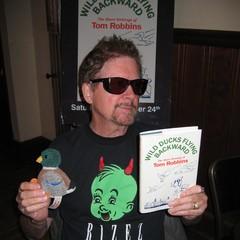
Tom Robbins (born July 22, 1936) is an acclaimed American novelist known for his whimsical, philosophical, and often surreal storytelling. His works blend pop culture, Eastern spirituality, and countercultural themes, with notable titles including 'Another Roadside Attraction' and 'Even Cowgirls Get the Blues'. Born in North Carolina, Robbins worked as a journalist and art critic before turning to fiction. His novels are celebrated for their linguistic playfulness, eccentric characters, and profound meditations on love, freedom, and the human condition. Though not a recipient of major literary prizes, he has cultivated a devoted global readership and influenced generations of writers. He remains a distinctive voice in contemporary American literature. more
You May Also Like
“You can be your own, unknow self-- not a psalm, but a segue. It's time.”
“Focus on making yourself better, not thinking you are better.”
“4 Important Things to Win Every New Year: 1. Pray 2. Plan 3. Pursue 4. Persist”
“Jesus gave gift to men so that they can function in their calling.”