Quotessence
Home / Quotes / Quote by Frederick Douglass

Quote by Frederick Douglass

“That a man might do something very audacious and desperate for money, power or fame, was to the general apprehension quite possible; but, in face of plainly-written law, in face of constitutional guarantees protecting each state against domestic violence, in face of a nation of forty million of people, that nineteen men could invade a great State to liberate a despised and hated race, was to the average intellect and conscience, too monstrous for belief.”

Quote by Frederick Douglass

Work

John Brown

Browse quotes and source details for this work. more

Author

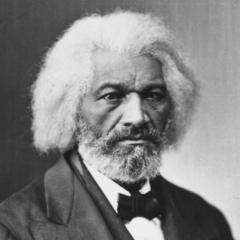
Frederick Douglass
Frederick Douglass

Frederick Douglass was a renowned orator and writer, born into a slave family in Maryland, USA. He gained his freedom in the mid-19th century through self-education and became one of the leaders of the abolitionist movement. Douglass made significant contributions to the cause of equality and justice in the United States through his incisive speeches and writings, which exposed the cruelty of slavery and inspired countless people to join the abolitionist movement. more

You May Also Like

“In the heated atmosphere after the Lincoln assassination, quite a few northerners compared Lee to the infamous John Brown, the abolitionist who was captured, tried, and hanged for the Harper's Ferry raid in 1859. Brown had been found guilty of treason against the state of Virginia after a jury deliberated for only forty-five minutes...Coincidentally, it had been Colonel Robert E. Lee of the US Army that eventually put down John Brown's short-lived rebellion at Harper's Ferry.”

“But in the weeks after the conflict, he joined with abolitionists in transforming John Brown in the eyes of antislavery northerners from a madman to a “martyr”. Countless Americans came to admire his David-like courage to strike at the mighty and hated Goliath-like slave power. The disdain for violent Black revolutionaries lurked in the shadows of the praises for John Brown, however. Black slave rebels never became martyrs and remained madmen and madwomen. Never before had the leader of a major slave uprising been so praised. Not since Bacon’s Rebellion had the leader of a major antislavery uprising been White.”

“If we had learned anything over the last decade, it was that there was no other way to defeat slavery, except with a willingness to die for it. We had learned what the Negroes long knew. And thus we merely did what the Negroes themselves had done over and over in the past—in Haiti, in the mountains of Jamaica, and in the swamps of Virginia—but could not do out there on the plains of Kansas. We did what we wanted the Negroes to do in Kansas. By slaying those five pro-slavers on the Pottawatomie that night, we placed hundreds, thousands, of other white men in the same position that we along amongst the whites had held for years: for now every white man in Kansas, anti-slaver and pro-slaver alike, had to be ready to die for his cause.”

“Who is it whose safety requires that Captain Brown be hung? Is it indispensable to any Northern man? Is there no resource but to cast these men also to the Minotaur? If you do not wish it, say so distinctly. While these things are being done, beauty stands veiled and music is a screeching lie. Think of him,—of his rare qualities!—such a man as it takes ages to make, and ages to understand; no mock hero, nor the representative of any party. A man such as the sun may not rise upon again in this benighted land.”