“The letter said that they were two feet high, and green, and shaped like plumber's friends. Their suction cups were on the ground, and their shafts, which were extremely flexible, usually pointed to the sky. At the top of each shaft was a little hand with a green eye in its palm. The creatures were friendly, and they could see in four dimensions. They pitied Earthlings for being able to see only three. They had many wonderful things to teach Earthlings, especially about time. Billy promised to tell what some of those wonderful things were in his next letter. Billy was working on his second letter when the first letter was published. The second letter started out like this: The most important thing I learned on Tralfamadore was that when a person dies he only appears to die. He is still very much alive in the past, so it is very silly for people to cry at his funeral. All moments, past, present and future, always have existed, always will exist. The Tralfamadorians can look at all the different moments just that way we can look at a stretch of the Rocky Mountains, for instance. They can see how permanent all the moments are, and they can look at any moment that interests them. It is just an illusion we have here on Earth that one moment follows another one, like beads on a string, and that once a moment is gone it is gone forever. When a Tralfamadorian sees a corpse, all he thinks is that the dead person is in a bad condition in that particular moment, but that the same person is just fine in plenty of other moments. Now, when I myself hear that somebody is dead, I simply shrug and say what the Tralfamadorians say about dead people, which is "so it goes.”
Quote by Kurt Vonnegut
Work
Kurt Vonnegut's Slaughterhouse-Five is a satirical and philosophical novel that combines elements of science fiction with the author's own experiences as a prisoner of war during the Allied bombing of Dresden. The narrative is non-linear and employs a time-traveling protagonist, Billy Pilgrim, who is haunted by his past and the events of the war. The book is known for its dark humor and its exploration of themes such as the absurdity of war, the nature of time, and the human condition. more
Author
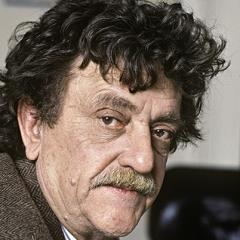
Kurt Vonnegut was an American writer known for his unique humor and profound satire. His works often explore themes of war, humanity, society, and politics. His most famous works include 'Slaughterhouse-Five' and 'Cat's Cradle'. His writing style has been widely appreciated by readers and has had a profound impact on literature. more
You May Also Like
“Often, it's the small things in life that bring the greatest joy.”
“You were a crushed and broken thing, like a butterfly crumpled in the hand of a child.”
“There ain't no happy endings for half-bloods." Ryder ~ Darkest Before Dawn #3 The Veil Series”
“Half demon, half human, wholly f*cked." ~ Muse”
“The gift of clairvoyance is not for the faint of heart.”