Quotessence
Home / Quotes / Quote by Elizabeth Gaskell

Quote by Elizabeth Gaskell

“He were found drowned. He were coming home very hopeless o' aught on earth. He thought God could na be harder than men; mappen not so hard; mappen as tender as a mother; mappen tenderer. I'm not saying he did right, and I'm not saying he didn't wrong. All I say is, may neither me nor mine ever have his sore heart, or we may do like things.”

Quote by Elizabeth Gaskell

Work

North and South

Elizabeth Gaskell's classic novel delves into the lives of Margaret Hale and her family as they relocate from the North to the industrialized South of England. The story examines themes of social reform, class struggle, and personal growth amidst the backdrop of the burgeoning industrial revolution. more

Author

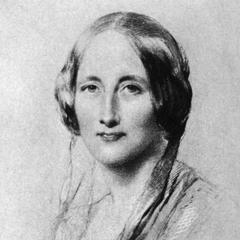
Elizabeth Gaskell
Elizabeth Gaskell

Elizabeth Gaskell was a British novelist born on September 29, 1810, in Manchester. Her works primarily depicted the social life of Britain during the Industrial Revolution, focusing on the lives of the working class. Gaskell is renowned for her delicate emotional portrayal and profound social insight, with notable works including 'Mary Barton' and 'North and South'. more

You May Also Like

“An active life serves the purpose of giving man the opportunity to realize values in creative work, while a passive life of enjoyment affords him the opportunity to obtain fulfillment in experiencing beauty, art, or nature. But there is also purpose in that life which is almost barren of both creation and enjoyment which admits of but one possibility of high moral behavior: namely, in man's attitude to his existence, an existence restricted by external forces. A creative life and a life of enjoyment are banned to him. But not only creativeness and enjoyment are meaningful. If there is a meaning in life at all, then there must be a meaning in suffering. Suffering is an ineradicable part of life, even as fate and death. Without suffering and death human life cannot be complete. The way in which a man accepts his fate and all the suffering it entails, the way in which he takes up his cross, gives him ample opportunity-even under the most difficult circumstances- to add a deeper meaning to his life. It may remain brave, dignified, and unselfish. Or in the bitter fight for self-preservation he may forget his human dignity and become no more than an animal. Here lies the chance for a man either to make use of or to forgo the opportunities of attaining the moral values that a difficult situation may afford him. And this decides whether he is worthy of his sufferings or not. Do not think that these considerations are unworldly and too far removed from real life. It is true that only a few people are capable of reaching such high moral standards. Of the prisoners only a few kept their full inner liberty and obtained those values which their suffering afforded, but even one such example is sufficient proof that man's inner strength may raise him above his outward fate. Such men are not only in concentration camps. Everywhere man is confronted with fate, with the chance of achieving something through his own suffering.”

“Knowing the Techniques of Survival........ Our fears and anxieties will often drive us to build impenetrable walls that act like blinders deflecting others and preventing us from seeing who surrounds us. Getting focused to the things that matter are the Key to what has to be to COMPLETE our MISSION. "I Had Every Excuse to Fail but I Chose None" Speak Life!!! (sky)”