Quotessence
Home / Quotes / Quote by Charles Mackay

Quote by Charles Mackay

Work

Extraordinary Popular Delusions and The Madness of Crowds

This book delves into the origins and consequences of various speculative bubbles and mass delusions, examining the psychology and behavior of crowds in the context of historical events. more

Author
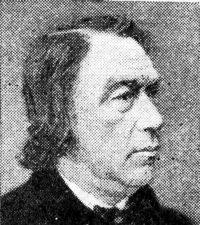
Charles Mackay
Charles Mackay

Charles Mackay was a prominent British poet born on March 27, 1814, and died on December 24, 1889. His poetry is known for its profound emotion and vivid imagery, which has had a lasting impact on subsequent poets. more

You May Also Like

“Be silent and listen: have you recognized your madness and do you admit it? Have you noticed that all your foundations are completely mired in madness? Do you not want to recognize your madness and welcome it in a friendly manner? You wanted to accept everything. So accept madness too. Let the light of your madness shine, and it will suddenly dawn on you. Madness is not to be despised and not to be feared, but instead you should give it life...If you want to find paths, you should also not spurn madness, since it makes up such a great part of your nature...Be glad that you can recognize it, for you will thus avoid becoming its victim. Madness is a special form of the spirit and clings to all teachings and philosophies, but even more to daily life, since life itself is full of craziness and at bottom utterly illogical. Man strives toward reason only so that he can make rules for himself. Life itself has no rules. That is its mystery and its unknown law. What you call knowledge is an attempt to impose something comprehensible on life.”

“And how do you know that you're mad? "To begin with," said the Cat, "a dog's not mad. You grant that?" I suppose so, said Alice. "Well then," the Cat went on, "you see a dog growls when it's angry, and wags it's tail when it's pleased. Now I growl when I'm pleased, and wag my tail when I'm angry. Therefore I'm mad.”

“Humans, as a rule, don't like mad people unless they are good at painting, and only then once they are dead. But the definition of mad, on Earth, seems to be very unclear and inconsistent. What is perfectly sane in one era turns out to be insane in another. The earliest humans walked around naked with no problem. Certain humans, in humid rainforests mainly, still do so. So, we must conclude that madness is sometimes a question of time, and sometimes of postcode. Basically, the key rule is, if you want to appear sane on Earth you have to be in the right place, wearing the right clothes, saying the right things, and only stepping on the right kind of grass.”

“Have you heard of the illness hysteria siberiana? Try to imagine this: You're a farmer, living all alone on the Siberian tundra. Day after day you plow your fields. As far as the eye can see, nothing. To the north, the horizon, to the east, the horizon, to the south, to the west, more of the same. Every morning, when the sun rises in the east, you go out to work in your fields. When it's directly overhead, you take a break for lunch. When it sinks in the west, you go home to sleep. And then one day, something inside you dies. Day after day you watch the sun rise in the east, pass across the sky, then sink in the west, and something breaks inside you and dies. You toss your plow aside and, your head completely empty of thought, begin walking toward the west. Heading toward a land that lies west of the sun. Like someone, possessed, you walk on, day after day, not eating or drinking, until you collapse on the ground and die. That's hysteria siberiana.”