Quotessence
Home / Quotes / Quote by Joseph de Maistre

Quote by Joseph de Maistre

“Man's destructive hand spares nothing that lives; he kills to feed himself, he kills to clothe himself, he kills to adorn himself, he kills to attack, he kills to defend himself, he kills to instruct himself, he kills to amuse himself, he kills for the sake of killing. Proud and terrible king, he needs everything and nothing resists him ... from the lamb he tears its guts and makes his harp resound ... from the wolf his most deadly tooth to polish his pretty works of art; from the elephant his tusks to make a toy for his child - his table is covered with corpses ... And who in all of this will exterminate him who exterminates all others? Himself. It is man who is charged with the slaughter of man ... So it is accomplished ... the first law of the violent destruction of living creatures. The whole earth, perpetually steeped in blood, is nothing but a vast altar upon which all that is living must be sacrificed without end, without measure, without pause, until the consummation of things, until evil is extinct, until the death of death.”

Quote by Joseph de Maistre

Work

St Petersburg Dialogues: Or Conversations on the Temporal Government of Providence

This work is a collection of dialogues that delve into the concept of divine providence, examining its role in shaping the temporal aspects of human life. The discussions take place in the historical context of St Petersburg, offering a unique perspective on the intersection of faith and governance. more

Author
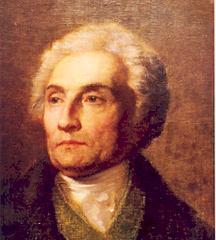
Joseph de Maistre
Joseph de Maistre

Joseph de Maistre was a French philosopher known for his conservative political theories, which had a profound impact on 19th-century European political philosophy. more

You May Also Like

“Rare are the handful of principles that incessantly drive us to stand even when we face the stark realization that we will likely perish in the standing. And rarer still is the person who will surrender all to protect such principles. Yet, the rudimentary principles of freedom and liberty pristinely untarnished by greed and selfishness took captive the hearts of simple people and raised this nation up from untamed wilderness and unchecked tyranny. And let us all be warned that without renewed adherence to these principles, we will rapidly return this nation to untamed wilderness and unchecked tyranny.”

“Do not go gentle into that good night, Old age should burn and rave at close of day; Rage, rage against the dying of the light. Though wise men at their end know dark is right, Because their words had forked no lightning they Do not go gentle into that good night. Good men, the last wave by, crying how bright Their frail deeds might have danced in a green bay, Rage, rage against the dying of the light. Wild men who caught and sang the sun in flight, And learn, too late, they grieved it on its way, Do not go gentle into that good night. Grave men, near death, who see with blinding sight Blind eyes could blaze like meteors and be gay, Rage, rage against the dying of the light. And you, my father, there on the sad height, Curse, bless, me now with your fierce tears, I pray. Do not go gentle into that good night. Rage, rage against the dying of the light.”

“And then came a damp, cold night in Flanders, through which we marched in silence, and when the day began to emerge from the mists, suddenly an iron greeting came whizzing at us over our heads, and with a sharp report sent the little pellets flying between our ranks, ripping up the wet ground; but even before the little cloud had passed, from two hundred throats the first hurrah rose to meet the first messenger of death. Then a crackling and a roaring, a singing and a howling began, and with feverish eyes each one of us was drawn forward, faster and faster, until suddenly past turnip fields and hedges the fight began, the fight of man against man. And from the distance the strains of a song reached our ears, coming closer and closer, leaping from company to company, and just as Death plunged a busy hand into our ranks, the song reached us too and we passed it along: Deutschland, Deutschland über Alles, über Alles in der Welt!”