Quotessence
Home / Quotes / Quote by Louis L'Amour

Quote by Louis L'Amour

Work

The Lonesome Gods

This science fiction novel explores themes of existentialism and the quest for understanding in a universe populated by enigmatic beings. The Lonesome Gods, as the title suggests, are solitary entities that travel through space, pondering the nature of existence and the mysteries of the cosmos. more
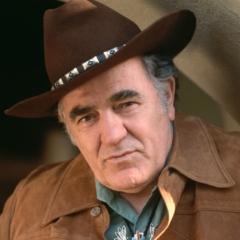
Author

Louis L'Amour
Louis L'Amour

Louis L'Amour (March 22, 1908 - June 10, 1988) was a renowned American author, best known for his Western novels. His works are characterized by vivid descriptions, tense plots, and profound character development, making them highly popular among readers. more

You May Also Like

“And, thinking of this judgment I would no longer be able to change, I suddenly felt a kind of relief, as if peace could come to me only after the moment when there would be nothing to add and nothing to remove in that arbitrary ledger of misunderstandings, and the galaxies which were gradually reduced to the last tail of the last luminous ray, winding from the sphere of darkness, seemed to bring with them the only possible truth about myself, and I couldn’t wait until all of them, one after the other, had followed this path.”

“God is our final say in who and what's negative and who and what's positive in our lives. It is best not to have this so over-simplified as the illusioned superstitionists have it; an infinite being's tests may not always be so flowery, and the things we may see as positive are in many cases simply desires of our sinful nature. We are to protect our spirit without falling into the narcissistic mistake of trying to protect our selfish emotions, which the latter, in turn, is more than unlikely to bring peace and happiness. But rather guilt and emptiness. When one walks around constantly, in his mind, attempting to separate positive versus negative people, he is already controlled by something even worse than those he calls the 'negative people', and that is before he spots it soon enough to avoid it as he hypocritically tries to avoid them.”

“In the nine years since [Robert] Harris’s novel [Conclave] was published our culture has, if anything, become more enamored with certainty, not less — which is really saying something. Ours is a culture, a society, that seems fantastically certain of certainty. Certainty rules our political discourse, an our-side-is-right-the-other-side-wrong absolutism that the internet helps to empower. As Warzel and Caulfield lamented in The Atlantic recently, ours is a culture “where every event — every human success or tragedy — becomes little more than evidence to score political points... It is a culture where you never have to change your mind or even confront uncomfortable information.” You don’t need to be Wittgenstein to recognize that certainty as a habit of the mind, as an epistemological reflex, ain’t been doing us any favors — not at the level of the individual or the society. Certainty is a state of final judgment — one might even say terminal judgment. Certainty is the opposite of curiosity and open-ness, and about the worst form of knowing there is because it brooks no discussion, no amelioration, no correction, no testing.”