Quotessence
Home / Quotes / Quote by Aleister Crowley

Quote by Aleister Crowley

“I therefore hold the legendary Jesus in no way responsible for the trouble: it began with Luther, perhaps, and went on with Wesley; but no matter! — what I am trying to get at is the religion which makes England to-day a hell for any man who cares at all for freedom. That religion they call Christianity; the devil they honour they call God. I accept these definitions, as a poet must do, if he is to be at all intelligible to his age, and it is their God and their religion that I hate and will destroy.”

Quote by Aleister Crowley

Work

The World's Tragedy

Browse quotes and source details for this work. more

Author

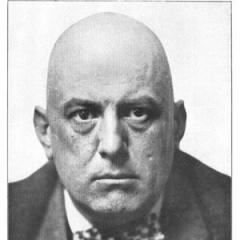
Aleister Crowley
Aleister Crowley

Aleister Crowley, a British poet, mystic, and writer, was born on October 12, 1875, and died on December 1, 1947. He is known for his poetic works and mystical practices, and is considered one of the most controversial figures of the 20th century. more

You May Also Like

“If I have dealt at some length with this single side of Wesley's character-I mean his preoccupation with strange psychological disturbances, now commonly minimized-it is because I think he, and the other prophets of the Evangelical movement, have succeeded in imposing upon English Christianity a pattern of their own. They have succeeded in identifying religion with a real or supposed experience. I say 'real or supposed', because in the nature of things you cannot prove the validity of any trance, vision, or ecstasy; it remains something within the mind. Still less can you prove the validity of a lifelong Christ-inspired attitude; in the last resort, all it proves is that certain psychological influences are strong enough to overcome, in a given case, all the temptations towards backsliding which a cynical world affords. But, for better or worse, the England which weathered the excitements and disappointments of the early nineteenth century was committed to a religion of experience; you did not base your hopes on this or that doctrinal calculation; you knew. For that reason the average Englishman was, and is, singularly unaffected by reasonings which would attempt to rob him of his theological certainties, whatever they may be. For that reason, also, he expects much (perhaps too much) of his religion in the way of verified results; he is easily disappointed if it does not run according to schedule. It must chime in with his moods, rise superior to his temptations; a decent average of special providences must convince him that it works. Otherwise, though without rancour, he abandons the practice of it. He is not prepared for that unrewarded adventure of naked faith which is, for the Quietist, the common lot of Christians. Not on the scale, but in the spirit, of those eighteenth-century pioneers, he demands 'heart-work'. And, in days when we are apparently less moved by the crowd-appeal, it is hard to come by.”

“It is wise to ask questions. The only way for anyone to experience truth is to find it on their own through their own seeking, experience(s), and inner knowing. The depth of knowledge a person obtains through experiencing something firsthand, and by it resonating as truth within one’s heart, far exceeds a belief taught to them using mere words.”

“I hope I never hold anyone down; I hope I never cut someone's wings. I hope I never take anyone's freedom; I hope I never cover someone's eyes and ears. I hope that I never keep anyone from having their true love; I hope that I never cage someone's heart. I hope to be the wind and the air; the window and the song; the field in which love may roam, run and then bury itself.”

“The last year of her college career was wheeling slowly round. She could see ahead her examination and her departure. She had the ash of disillusion gritting under her teeth. Would the next move turn out the same? Always the shining doorway ahead; and then, upon approach, always the shining doorway was a gate into another ugly yard, dirty and active and dead. Always the crest of the hill gleaming ahead under heaven: and then, from the top of the hill only another sordid valley full of amorphous, squalid activity.”