Quotessence
Home / Quotes / Quote by Nicholas Sparks

Quote by Nicholas Sparks

Work

The Notebook

This classic novel delves into the passionate and tumultuous relationship between two characters, as they navigate the complexities of love, loss, and societal expectations throughout their lives. more
Author

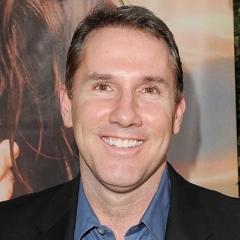
Nicholas Sparks
Nicholas Sparks

Nicholas Sparks, born on December 31, 1965, is an American novelist renowned for his romantic and emotionally rich stories. His works often explore themes of love, family, and the meaning of life, and have gained widespread popularity among readers. Sparks' novels have frequently topped bestseller lists globally, and have been translated into multiple languages. His works have also been adapted into numerous films, such as 'Titanic' and 'The Notebook'. more

You May Also Like

“When you sit in silence long enough, you learn that silence has a motion. It glides over you without shape or form, exactly like water. Its color is silver. And silence has a sound you hear only after hours of wading inside it. The sound is soft, like flute notes rising up, like the words of glass speaking. Then there comes a point when you must shatter the blindness of its words, the blindness of its light.”

“We are not our own any more than what we possess is our own. We did not make ourselves, we cannot be supreme over ourselves. We are not our own masters. We are God's property. Is it not our happiness thus to view the matter? Is it any happiness or any comfort, to consider that we are our own? It may be thought so by the young and prosperous. These may think it a great thing to have everything, as they suppose, their own way–to depend on no one–to have to think of nothing out of sight, to be without the irksomeness of continual acknowledgment, continual prayer, continual reference of what they do to the will of another. But as time goes on, they, as all men, will find that independence was not made for man–that it is an unnatural state–will do for a while, but will not carry us on safely to the end …'" Mustapha Mond paused, put down the first book and, picking up the other, turned over the pages. "Take this, for example," he said, and in his deep voice once more began to read: "'A man grows old; he feels in himself that radical sense of weakness, of listlessness, of discomfort, which accompanies the advance of age; and, feeling thus, imagines himself merely sick, lulling his fears with the notion that this distressing condition is due to some particular cause, from which, as from an illness, he hopes to recover. Vain imaginings! That sickness is old age; and a horrible disease it is. They say that it is the fear of death and of what comes after death that makes men turn to religion as they advance in years. But my own experience has given me the conviction that, quite apart from any such terrors or imaginings, the religious sentiment tends to develop as we grow older; to develop because, as the passions grow calm, as the fancy and sensibilities are less excited and less excitable, our reason becomes less troubled in its working, less obscured by the images, desires and distractions, in which it used to be absorbed; whereupon God emerges as from behind a cloud; our soul feels, sees, turns towards the source of all light; turns naturally and inevitably; for now that all that gave to the world of sensations its life and charms has begun to leak away from us, now that phenomenal existence is no more bolstered up by impressions from within or from without, we feel the need to lean on something that abides, something that will never play us false–a reality, an absolute and everlasting truth. Yes, we inevitably turn to God; for this religious sentiment is of its nature so pure, so delightful to the soul that experiences it, that it makes up to us for all our other losses.”