“…the understanding of any person is an exercise in genealogy. A man is not a static organism to be taken apart and analyzed and classified. A man is movement, motion, a continuum. There is no beginning to him. He runs through his ancestors, and the only beginning is the primal beginning of the single cell in the slime. The proper study of mankind is man, but man is an endless curve on the eternal graph paper, and who can see the whole curve?”
Quote by Wallace Stegner
Work
The Big Rock Candy Mountain
Browse quotes and source details for this work. more
Author
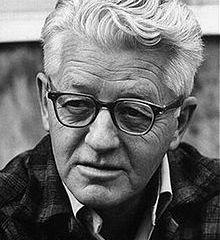
Wallace Stegner
Wallace Stegner was an influential American historian known for his extensive research on the history of the American West. His works not only documented the pioneering journey of the American West but also profoundly reflected the relationship between humans and nature. Stegner's writing style was unique and his language beautiful, which won him great popularity among readers. more
You May Also Like
Source: Flight to Arras
Source: Black Spring
“Humans are the most important entity in the universe … only to most people.”
Source: Broca's Brain Reflections on the Romance of Science
Source: Black Spring
“Have we traded the good of mankind for the agenda of our kind?”
Source: Open the Windows
Source: Vita Nostra
Source: North With Franklin: The Lost Journals of James Fitzjames