Quotessence
Home / Quotes / Quote by Victor Hugo

Quote by Victor Hugo

Work

The Hunchback of Notre-Dame

Victor Hugo's The Hunchback of Notre-Dame is a renowned novel that delves into the lives of various characters in 15th-century Paris. The story revolves around the deformed bell-ringer Quasimodo, his love for the beautiful gypsy Esmeralda, and the societal prejudices they face. more

Author
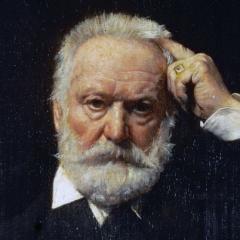
Victor Hugo
Victor Hugo

Victor Hugo, a French romantic poet, novelist, and playwright, was born on February 26, 1802, and died on May 22, 1885. He is considered one of the greatest writers in French literary history, known for his profound humanistic concerns and rich imagination. more

You May Also Like

“In a society of increasingly mass-produced, assembly-line entertainment, where every individual is treated like an empty pitcher to be filled from above, jazz retains something of the spirit of the handicrafts of yesteryear. The print of the human spirit warms it. Deep down, jazz expresses the enforced & compassionate attitudes of a minority group and may well appeal to us because we all have blue moods and, in a fundamental sense, none of us is wholly free.”

“It is an old and wise caution, that when our neighbor's house is on fire, we ought to take care of our own. For tho', blessed be God, I live in a government where liberty is well understood, and freely enjoy'd; yet experience has shown us all that bad precedent in one government is soon set up for an authority in another; and therefore I cannot but think it mine, and every honest man's duty that we ought at the same time to be upon our guard against power, wherever we apprehend that it may affect ourselves or our fellow subjects. I should think it my duty, if required, to go to the utmost part of the land, where my service could be of any use in assisting to quench the flame of prosecutions upon informations, set on foot by the government, to deprive a people of their right to remonstrating (and complaining too) of the arbitrary attempts of men in power.”

“Judgment is given to men that they may use it. Because it may be used erroneously, are men to be told that they ought not to use it at all? To prohibit what they think pernicious is not claiming exemption from error, but fulfilling the duty incumbent on them, although fallible, of acting on their conscientious conviction. If we were never to act on our opinions, because those opinions ‘lay be wrong, we should leave all our interests uncared for, and all our duties unperformed. An objection which applies to all conduct can be no valid objection to any conduct in particular.”