Quotessence
Home / Quotes / Quote by Jim Butcher

Quote by Jim Butcher

Work

Blood Rites

Browse quotes and source details for this work. more
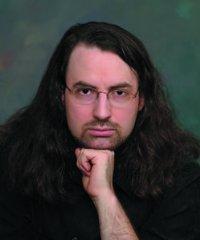
Author

Jim Butcher
Jim Butcher

Jim Butcher, born on October 26, 1971, is an American fantasy author known for his unique world-building and imaginative storytelling. His 'Dresden Files' series has gained immense popularity among readers. more

You May Also Like

“As long as there have been humans, we have searched for our place in the Cosmos. In the childhood of our species (when our ancestors gazed a little idly at the stars), among the Ionian scientists of ancient Greece, and in our own age, we have been transfixed by this question: Where are we? Who are we? We find that we live on an insignificant planet of a humdrum star lost between two spiral arms in the outskirts of a galaxy which is a member of a sparse cluster of galaxies, tucked away in some forgotten corner of a universe in which there are far more galaxies than people. This perspective is a courageous continuation of our penchant for constructing and testing mental models of the skies; the Sun as a red-hot stone, the stars as celestial flame, the Galaxy as the backbone of night. Since Aristarchus, every step in our quest has moved us farther from center stage in the cosmic drama. There has not been much time to assimilate these new findings. The discoveries of Shapley and Hubble were made within the lifetimes of many people still alive today. There are those who secretly deplore these great discoveries, who consider every step a demotion, who in their heart of hearts still pine for a universe whose center, focus and fulcrum is the Earth. But if we are to deal with the Cosmos we must first understand it, even if our hopes for some unearned preferential status are, in the process, contravened. Understanding where we live is an essential precondition for improving the neighborhood. Knowing what other neighborhoods are like also helps. If we long for our planet to be important, there is something we can do about it. We make our world significant by the courage of our questions and by the depth of our answers. We embarked on our cosmic voyage with a question first framed in the childhood of our species and in each generation asked anew with undiminished wonder: What are the stars? Exploration is in our nature. We began as wanderers, and we are wanderers still. We have lingered long enough on the shores of the cosmic ocean. We are ready at last to set sail for the stars.”

“I had six or seven close friends, most of whom I’m still in touch with. We used to have long discussions and arguments about everything from radio-controlled models to religion, and from parapsychology to physics. One of the things we talked about was the origin of the universe and whether it required a God to create it and set it going. I had heard that light from distant galaxies was shifted toward the red end of the spectrum and this was supposed to indicate that the universe was expanding. (A shift to the blue would have meant it was contracting.) But I was sure there must be some other reason for the red shift. Maybe light got tired, and more red, on its way to us. An essentially unchanging and everlasting universe seemed so much more natural. It was only after about two years of Ph.D. research that I realized I had been wrong.”

“The Multiplicity and the Unity are one and the same thing, a thing that is both many and one at the same time. The waves, and the currents underwater, make up the ocean. The ocean is the underlying basis for every wave. Neither the ocean, nor the waves, can be understood in isolation from each other.”

“We must preserve the sense of unity and the sense of diversity and multiplicity. We must recognize that the One and the Many are the same thing viewed from different angles. The One is the Many. The One is manifested only in and through the Many. It has no separate existence apart from the Many. Equally the Many are the One. Even during their temporary separation, they are always part of the One, and always united with the One. Every one of us is always part of the One, and can unite with the One at any time we choose.”

“Everything goes forward like oiled clocks; for each minute of the dial there are a million noiseless clocks which tick off the rinds of time. We are traveling faster than the lightning calculator, faster than starlight, faster than the magician can think. Each second is a universe of time. And each universe of time is but a wink of sleep in the cosmogony of speed. When speed comes to its end we shall be there, punctual as always and blissfully undenominated. We shall shed our wings, our clocks and our mantelpieces to lean on. We will rise up feathery and jubilant, like a column of blood, and there will be no memory to drag us down again.”