Quotessence
Home / Quotes / Quote by William Shakespeare

Quote by William Shakespeare

Work

Timon of Athens

Timon of Athens is a tragedy written by William Shakespeare. The story revolves around the protagonist, Timon, who is known for his generosity and hospitality. As the play progresses, Timon's friends and associates exploit his kindness, leading to his disillusionment with humanity. The narrative delves into themes of friendship, wealth, and betrayal, set against the backdrop of ancient Athens. The play is noted for its exploration of the human condition and the consequences of excessive generosity. more
Author

William Shakespeare
William Shakespeare

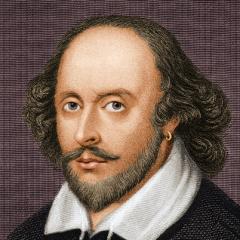
William Shakespeare (1564 - April 23, 1616) was one of the greatest poets of the English Renaissance, renowned for his dramatic works. His plays spanned a variety of genres, including tragedy, comedy, and history, and have had a profound impact on literature worldwide. more

You May Also Like

“The most striking impression was that of an overwhelming bright light. I had seen under similar conditions the explosion of a large amount—100 tons—of normal explosives in the April test, and I was flabbergasted by the new spectacle. We saw the whole sky flash with unbelievable brightness in spite of the very dark glasses we wore. Our eyes were accommodated to darkness, and thus even if the sudden light had been only normal daylight it would have appeared to us much brighter than usual, but we know from measurements that the flash of the bomb was many times brighter than the sun. In a fraction of a second, at our distance, one received enough light to produce a sunburn. I was near Fermi at the time of the explosion, but I do not remember what we said, if anything. I believe that for a moment I thought the explosion might set fire to the atmosphere and thus finish the earth, even though I knew that this was not possible.”

“So Roy's tears were understandable when he remembered tying animals to all those stakes. Such a cruel experiment had been performed on animals, of course, on sheep and pigs and cattle and horses and monkeys and ducks and chickens and geese, but surely not on a zoo such as Roy described. To hear him tell it, he had tethered peacocks and snow leopards and gorillas and crocodiles and albatrosses to the stakes. In his big brain, Bikini became the exact reverse of Noah's ark. Two of every sort of animal had been brought there in order to be atom-bombed.”

“As the tail on our back disappeared as we no longer had any use for it, nuclear weapons will also disappear once we realize, we no longer have any need for them. But no matter how much we daydream, it will never happen as some sort of grand geopolitical gesture of international collaboration - somebody has to take the first step - one nuclear-capable state has to take that first leap of bold faith and naive trust! The question is, who will it be? The first nuclear nation to abandon its nuclear weapons, will be the First Peacemaking Nation of Earth - and their head of state, the First Peacemaker.”

“Simulated disorder postulates perfect discipline, simulated fear postulates courage; simulated weakness postulates strength. Hiding order beneath the cloak of disorder is simply a question of subdivision; concealing courage under a show of timidity presupposes a fund of latent energy; masking strength with weakness is to be effected by tactical dispositions. Thus one who is skillful at keeping the enemy on the move maintains deceitful appearances, according to which the enemy will act. He sacrifices something, that the enemy may snatch at it.”

“Our fellowman either may voluntarily reveal to us the truth about himself, or by dissimulation he may deceive us as to the truth. No other object of knowledge can thus of its own initiative, either enlighten us with reference to itself or conceal itself, as a human being can. No other knowable object modifies its conduct from consideration of its being understood or misunderstood.”

“Do not make passion an argument for truth! - O you good-natured and even noble enthusiasts, I know you! You want to win your argument against us, but also against yourself, and above all against yourself!and a subtle and tender bad conscience so often incites you against your enthusiasm! How ingenious you then become in the outwitting and deadening of this conscience! How you hate the honest, the simple, the pure, how you avoid their innocent eyes! That knowing better whose representatives they are and whose voice you hear all too loudly within you, how it casts doubt on your belief- how you seek to make it suspect as a bad habit, as a sickness of the age, as neglect and infection of your own spiritual health! You drive yourself to the point of hating criticism, science, reason! You have to falsify history so that it may bear witness for you, you have to deny virtues so that they shall not cast into the shade those of your idols and ideals! Coloured pictures where what is needed is rational grounds! Ardour and power of expression! Silvery mists! Ambrosial nights! You understand how to illuminate and how to obscure, and how to obscure with light! And truly, when your passion rises to the point of frenzy, there comes a moment when you say to yourself: now I have conquered the good conscience, now I am light of heart, courageous, self-denying, magnificent, now I am honest! How you thirst for those moments when your passion bestows on you perfect self-justification and as it were innocence; when in struggle, intoxication, courage, hope, you are beside yourself and beyond all doubting; when you decree: 'he who is not beside himself as we are can in no way know what and where truth is!' How you thirst to discover people of your belief in this condition - it is that of intellectual vice - and ignite your flame at their torch! Oh your deplorable martyrdom! Oh your deplorable victory of the sanctified lie! Must you inflict so much suffering upon yourself? - Must you?”